The Impact of AI

Read in your language

Choose one of 20 languages. Translations open in Google Translate and may contain errors. Source links remain available.

Only the public page is shared with Google when you choose a language. Your browser language suggests a choice; travel never changes it automatically.

LatestNews updates

Verified AI. Human impact.

Understand what AI changes for your work and life.

Clear explanations, original sources and an honest account of how strong the evidence is.

Health & Life Sciences·Research paper

Can AI models answer infectious-disease pharmacy exams? Five scored near 90%—but images and harder reasoning exposed gaps

Pharmacy students may use model errors as learning material, but need instructors to check rationales and protect assessment integrity.

Evidence: Five model interfaces answered the same 227 course questions once, producing 1,135 scored responses; overall accuracy was 90.2% and individual model totals ranged from 89.4% to 91.2%.

What remains uncertain: The study used 227 questions from one infectious-disease course at one US pharmacy school, limiting generalisability across curricula, countries and clinical settings.

Latest linked source · Scientific Reports · 2026-11-07. Evidence & limits

Read the 2 min brief Full evidence · 9 minReleased 7 Nov, 15:00 GMT

Start with your question

Evidence you can use

All evidence guides →

Our approach: original sources, clear limits and visible corrections. How AI assists this publication.

Your reading · Saved 0Choose topics & manage saved stories

Stored only on this browser. No account needed. Your saved stories and choices are not sent to analytics.

Continue reading

Reports you open will appear here.

Saved for later

Tap Save on any report.

Free AI briefing · Founding reader list

Three AI developments that matter to your work and life.

Understand what changed, who it affects and what remains uncertain. Read the sample, choose your topics and join the next edition.

Evidence linkedGlobal coverageFree
Read a sample briefing

Three AI findings, one useful evidence visual and links to the full reporting. See a sample. Our weekly briefing is prepared on Fridays; unsubscribe at any time.

Choose your topics (optional)

A welcome email follows signup. Unsubscribe at any time.

Global intelligence feed

Latest reporting

41 recent verified reports

2026-11-09 UK edition · Source dates & coverage

Reports appear after verification. Current coverage uses sources from today and the preceding three calendar days. Earlier work is clearly dated. Browse the archive.

Earlier source dates · original dates on each card

Videos · People & practice

Watch & understand

All videos

What does AI mean for your work, learning and health? Start with these publisher interviews and discussions. Each includes a short explanation and an evidence check.

People taking notes together around a wooden meeting table.

Illustrative photo · not a video frame

UNESCO · 11 min 27 sec · Background explainer

UNESCO Talks: Interview with 2024 Nobel laureate Professor Daron Acemoglu

Economist Daron Acemoglu discusses how choices about AI affect workers, inequality and society.

YouTube loads only when you choose; playback starts when you press play.

Context, sources & evidence check

Economist Daron Acemoglu discusses how choices about AI affect workers, inequality and society. Pair the interview with our comparison of task exposure, hiring and skills evidence.

Evidence check: An expert interview from 2024, offering a perspective on policy and work rather than a measured forecast of job losses.

Published 2024-10-14. Source checked 14 October 2026. Check captions on the publisher’s video page.

Read the AI and jobs guide

Photo: Dylan Gillis / Unsplash · Licence

A teacher speaking with university students, one with a raised hand.

Illustrative photo · not a video frame

UNESCO · 8 min 30 sec · Background explainer

Teacher to Teacher: Is AI reshaping education for the better?

A conversation about how teachers can guide AI use while preserving pupils’ judgement.

YouTube loads only when you choose; playback starts when you press play.

Context, sources & evidence check

A conversation about how teachers can guide AI use while preserving pupils’ judgement. Watch for the difference between helping a learner think and supplying an answer.

Evidence check: Teachers’ perspectives provide context. They do not establish that a particular AI tool improves learning outcomes.

Published 2025-01-23. Source checked 14 October 2026. Check captions on the publisher’s video page.

Read the education evidence

Photo: Vitaly Gariev / Unsplash · Licence

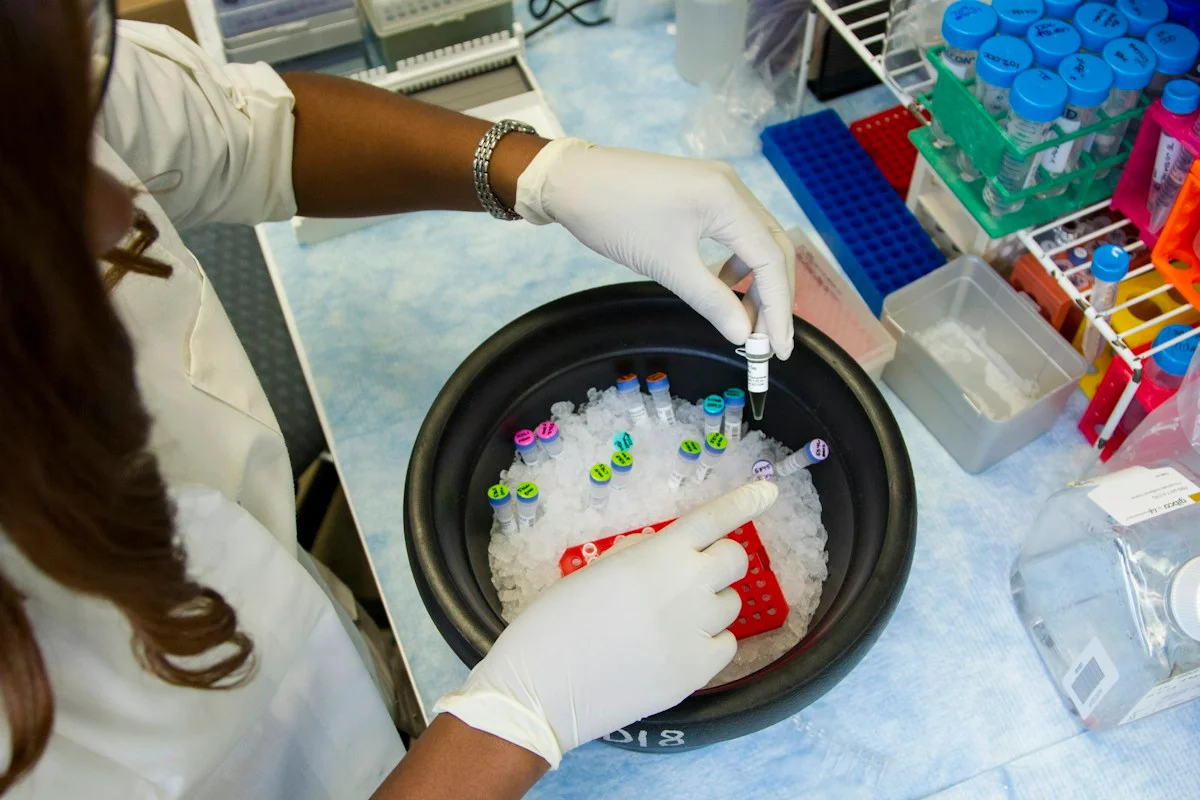
National Cancer Institute researcher Chanelle Case Borden preparing genetic samples for PCR.

Illustrative photo · not a video frame

The Royal Society · 44 min 28 sec · Background explainer

Is this the AI future we want? | The Royal Society

A Royal Society discussion with Madhumita Murgia and biomedical engineer Alison Noble on AI’s potential in healthcare, science and culture, recorded at the 30 June 2026 event.

YouTube loads only when you choose; playback starts when you press play.

Context, sources & evidence check

A Royal Society discussion with Madhumita Murgia and biomedical engineer Alison Noble on AI’s potential in healthcare, science and culture, recorded at the 30 June 2026 event.

Evidence check: A discussion of opportunities and risks, including future possibilities. It is not evidence that every application described is available or clinically proven.

Published 2026-07-01. Source checked 14 October 2026. Check captions on the publisher’s video page.

Check the healthcare evidence

Photo: Daniel Sone / National Cancer Institute / Unsplash · Licence

Your work. Your next step.Where could AI change your working day?Choose your work, sector, region and priority. Free, with sources shown.Try the Impact Radar

Beyond the announcement

What happened to the claim?

Follow the distinction between an announcement, a study and an observed outcome. Each record links the source, its limits and what evidence is still needed.

Explore the Impact Tracker →

Bring a real experience

Has AI changed a task in your workplace or classroom? Share an example for editorial review. We check evidence, permission and attribution before publication.

Contribute your experience →
Explore what changes for your work, health or learning

A personal lens on the evidence

What changes for me?

Choose what matters to you. Explore the finding, its human impact and the questions still open.

Finance & Business · Studied · Source 2026-11-071 of 1 reports

Does AI help manufacturers make greener products? A 333-firm survey finds an association—not emissions proof

Why it matters

Product and engineering teams need outcome-specific tests, not a generic claim that AI makes innovation greener.

What was checked

The usable sample was 333 firms across five manufacturing sectors. Seven hundred questionnaires were distributed, 612 returned and 333 retained, equal to 47.6% of the distributed questionnaires.

What remains open

The survey was cross-sectional, so temporal order and causality cannot be established.

These are published findings and editorial context, not a prediction about your individual circumstances. How we distinguish announced, studied and observed.

Want to explore your role and priorities? Open your Impact Radar
Explore research, sectors and evidence tools

Latest research · Global

New research, explained clearly

What each study found, what it did not prove, and why it matters.

Research paperEthiopia9 min

Can AI forecast a city’s power demand from ten annual observations? Tiny reported errors rest on a two-year test

What researchers still need to answer: A small-sample hybrid neural forecast of annual electricity demand in Adigrat, Ethiopia

What the evidence shows

The paper uses ten annual observations from 2016–2025: eight for training and two for testing, with domestic, commercial, industrial, street-lighting and total demand modelled separately.

What remains uncertain

Only ten annual observations were available: eight for training and two for testing.

The Impact Tracker · living evidence ledger

See whether an AI claim is announced, studied or observed.

Every report now has a stable record, an evidence stage, a confidence band, a source trail and an explicit next verification question.

Explore 1174 impact records
230Announced
845Studied
99Observed

Visible editorial accountability

The Impact of AI Editorial Desk is responsible for verification and corrections. Every record states whether it is source analysis, multi-source analysis or original reporting.

About the desk

Evidence from research institutes

Institute reports, examined

The findings, the method and the limits. Each analysis shows when its original report appeared.

McKinsey Global Survey · Original report 2026-08-25

McKinsey's 2026 AI survey: individual gains are clearer than company-wide returns

In a 1,719-person global survey, more respondents report AI helping their own productivity than report a measurable effect on company earnings. The gap deserves scrutiny, not a promise of inevitable returns.

McKinsey's figures rely on respondents' self-reports and attribution of outcomes to AI; the survey does not independently audit earnings or establish causation.

Intelligence by sector

Follow AI where it has real-world impact

Sponsor position

Reach careful readers—or commission decision-grade evidence.

Clearly labelled sponsorships and scoped intelligence briefs. Editorial coverage is never sold.

Want the evidence in your inbox? Join the free briefing or read a sample edition.

Advertising privacy choices

Google’s consent message lets readers in the UK, EEA and Switzerland allow, decline or manage advertising consent. You can reopen it to change or withdraw consent.