AI summaries cut perceived oncology workload—but 12 of 33 were incomplete
A prospective Dutch usability study found lower task-load scores and self-reported time savings. It involved nine staff participants and no patient outcomes, while four consultations contained clinically relevant discrepancies.
The short version
3 key points
- What changed
- Nine staff participants completed the baseline assessment; the prospective single-group study included complete data for 33 consultations handled by six clinicians.
- Why it matters
- Clinicians may gain preparation time and a clearer overview, while patients need assurance that compression does not erase allergies, diagnoses or other details that change care. Human review remains central in this evidence.
- What to watch
- Independent multi-centre replication, randomised crossover comparisons, observed preparation time, blinded error review, performance after the allergy-field fix, patient experience and evidence that decisions or outcomes are at least as safe as usual preparation.
Staff reported less effort during 33 AI-supported preparations
Researchers at the Netherlands Cancer Institute tested an AI tool that turns unstructured clinical notes into a structured summary before complex head-and-neck oncology consultations. Nine physicians, nurse specialists and supervisors completed baseline measures; six clinicians then used the system in 33 consultations with complete questionnaire data. Mean NASA Task Load Index score fell from 42.1 to 29.9, a 28.9% reduction. The estimated difference was minus 12.3 points (95% confidence interval minus 21.7 to minus 3.3; p=0.008). For 31 consultations with time estimates, staff reported saving 3.26 minutes on average.[1]
Who it affects
Clinicians may gain preparation time and a clearer overview, while patients need assurance that compression does not erase allergies, diagnoses or other details that change care. Human review remains central in this evidence.[1]
Keep in mind
Nine baseline participants; 33 complete consultation records from one department; no randomised or concurrent comparator; incomplete inclusion from 72 eligible consultations; self-reported time saving; no patient-safety or outcome endpoint; commercial affiliations.
Source analysis · 1 linked source. Original source date: 17 October 2026.
Continue the story
Read next
Health & Life Sciences
Can an AI agent take a better eye history than a resident?
A randomized trial at a specialist hospital in Guangzhou found that an LLM agent scored higher than ophthalmology residents on structured pre-consultation histories for 172 non-emergency patients. Interviews took much longer, examination findings narrowed the diagnostic gap, and the study did not test patient outcomes or emergency care.
2 min · 2 sources
Health & Life Sciences
Can chatbots match urologists on cancer decisions?
In 100 synthetic cancer cases, three leading chatbots were less often fully successful than two early-career urologists and made safety-critical errors far more often. Repeated answers also changed substantially.
2 min · 1 source
Read more The full report, methods and context
Staff reported less effort during 33 AI-supported preparations
Researchers at the Netherlands Cancer Institute tested an AI tool that turns unstructured clinical notes into a structured summary before complex head-and-neck oncology consultations. Nine physicians, nurse specialists and supervisors completed baseline measures; six clinicians then used the system in 33 consultations with complete questionnaire data. Mean NASA Task Load Index score fell from 42.1 to 29.9, a 28.9% reduction. The estimated difference was minus 12.3 points (95% confidence interval minus 21.7 to minus 3.3; p=0.008). For 31 consultations with time estimates, staff reported saving 3.26 minutes on average.[1]
The workflow signal came with visible completeness and safety gaps
Participants judged preparation successful in 28 of 33 consultations, while only 21 of 33 generated summaries were complete. They reported four clinically relevant discrepancies. Two arose downstream when missing allergy information was represented in the electronic record as 'no known allergies'; the authors classified those as moderate risk because absent documentation is not evidence that no allergy exists. One discrepancy was a model misclassification, while another correctly surfaced information that had been hidden in the record. The allergy representation was changed after the study, so the revised version was not evaluated in these results.
For clinicians, a few minutes saved before repeated complex appointments could be valuable, and a structured summary may reduce the effort of searching long records. But a concise summary can also hide omissions or make an uncertain field look definitive. The study therefore supports continued supervised testing, not autonomous preparation or a claim that safety improved.[1]
The distinction that matters
What the small prospective study actually tested
The experiment measured staff experience and summary quality during consultation preparation—not patient outcomes.
Records
Convert unstructured notes into a structured summary
Prepare information before an oncology consultation
Workflow
Collect complete data from 33 consultations
28 successful preparations; 21 complete summaries
Safety
Review reported discrepancies
Four clinically relevant issues, including two allergy-field errors
A small before-and-after study cannot separate tool effects from study effects
This was a single-department, single-group pre/post usability study, not a randomised comparison. Of 72 eligible consultations, 43 were intended for AI-supported use and 33 produced complete data. The fixed order means practice, expectations or the novelty of the system could contribute to lower workload scores. Time savings were clinicians' estimates rather than observed timestamps, and the study did not measure diagnostic decisions, treatment changes, patient experience, adverse events or health outcomes.
Health~Holland funded the work. Three authors are kaiko.ai employees and the company may have a commercial interest; the paper says the model was frozen before use and non-commercially affiliated institute researchers collected and analysed the primary outcomes. Those safeguards are relevant but do not remove the need for independent replication. A stronger assessment would use a randomised crossover design, direct time measurement, blinded completeness review, prespecified safety events and multi-centre evidence that any efficiency gain does not trade away clinically important context.[1]
Watch the background, then check the evidence
Illustrative photo · not a video frame
The Royal Society · 44 min 28 sec · Background explainer
Is this the AI future we want? | The Royal Society
YouTube loads only when you choose; playback starts when you press play.
A Royal Society discussion with Madhumita Murgia and biomedical engineer Alison Noble on AI’s potential in healthcare, science and culture, recorded at the 30 June 2026 event.
Evidence check: A discussion of opportunities and risks, including future possibilities. It is not evidence that every application described is available or clinically proven.
Published 2026-07-01. Source checked 14 October 2026. Check captions on the publisher’s video page.
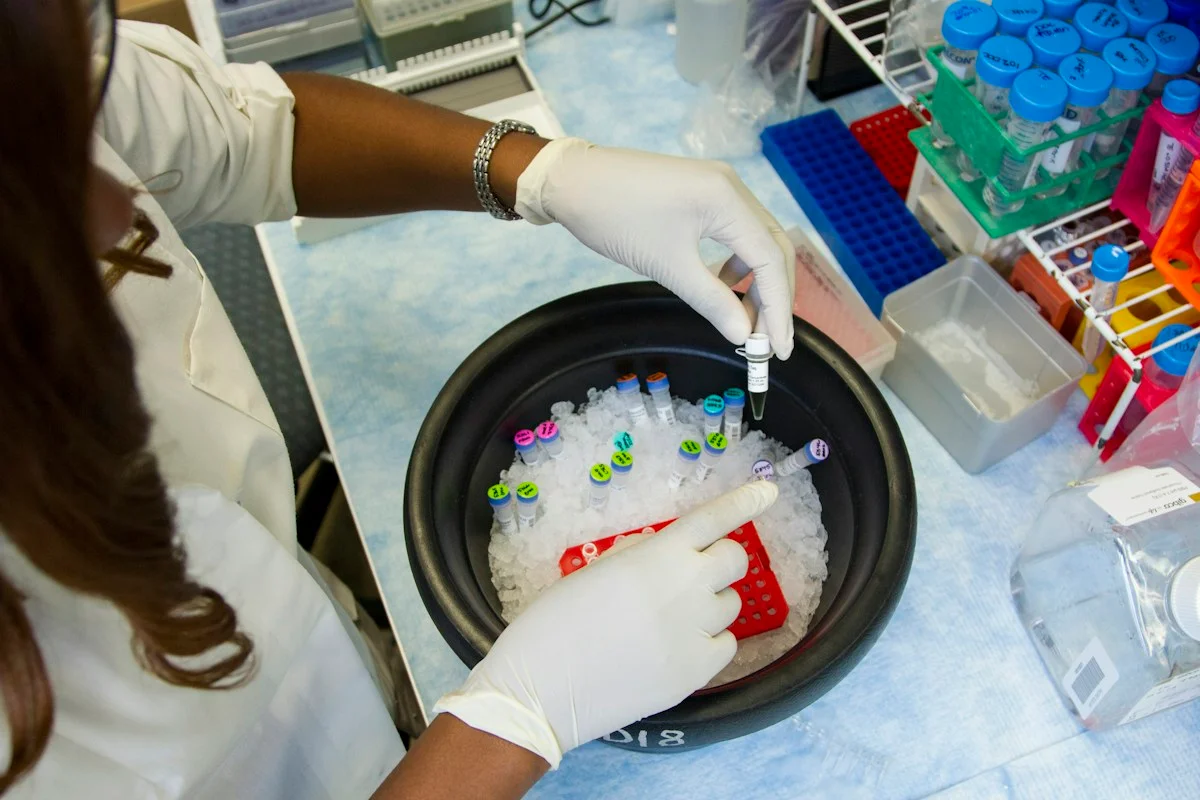
Check the healthcare evidencePhoto: Daniel Sone / National Cancer Institute / Unsplash · Licence
Evidence check
Nine baseline participants; 33 complete consultation records from one department; no randomised or concurrent comparator; incomplete inclusion from 72 eligible consultations; self-reported time saving; no patient-safety or outcome endpoint; commercial affiliations.
Reporting basis: Source analysis. Original source date: 17 October 2026.
Explore the full source and evidence record
What this means for people
- Clinicians may gain preparation time and a clearer overview, while patients need assurance that compression does not erase allergies, diagnoses or other details that change care. Human review remains central in this evidence.
Global context
The system was evaluated in a specialist Dutch cancer centre and one head-and-neck oncology workflow. Record structure, staffing, language, liability and clinical practice vary across hospitals and countries, limiting transfer without local evaluation.
What the evidence does not yet show
- Nine baseline participants; 33 complete consultation records from one department; no randomised or concurrent comparator; incomplete inclusion from 72 eligible consultations; self-reported time saving; no patient-safety or outcome endpoint; commercial affiliations.
What to watch next
- Independent multi-centre replication, randomised crossover comparisons, observed preparation time, blinded error review, performance after the allergy-field fix, patient experience and evidence that decisions or outcomes are at least as safe as usual preparation.
Living evidence record
Impact record IAI-1VLI2SR
Evidence stage
Studied
Confidence
Supported
Reporting basis
Source analysis
Independent or research support
Present
Record status
Monitoring
Last checked
17 October 2026
Source trail
1 direct source across 1 source type.
People impact
Documented in this record.
Uncertainty
Limits and next checks are explicit.
Stages describe the evidence available—not whether a technology is good or bad. See the public method.
Single-source reporting disclosure
This record analyses one direct source. It can establish what npj Digital Medicine published or reported, but it is not independent corroboration of every performance claim or predicted outcome. The confidence label will change only when broader evidence is added.
Evidence trail
Sources used for this report
Links checked 17 October 2026
Research question, topics and regions
AI-supported preparation for complex oncology consultations
Topics: Oncology · Clinical workflow · Medical records · Large language models · Patient safety
Regions: Netherlands · Europe · Global
This report is labelled source analysis. We summarise and analyse source material in our own words; company statements remain attributed claims until independently supported. Translated summaries preserve the meaning of the original source and link back to it. Read our editorial standards.
The Impact Brief · Free
Keep following the stories that matter to you.
Get our weekday briefing on what changed and why it matters. Choose your topics below.
Reader commentary
What does this mean where you are?
Tell us what you have seen at work, in your community or in everyday life. A question is welcome too. No account is needed; we review notes before publishing them.
Explore commentary across the portal →Published reader notes
0No published reader notes yet. You can start the evidence-led discussion above.
Prefer a private correction or response? Contact the newsroom.