Did AI discover high-temperature superconductors—or only generate candidates?
A peer-reviewed Iranian study predicts 22 previously unexplored plutonium-based materials above 50 K and more than 40 hydrides. None was synthesized or experimentally shown to superconduct.
The short version
- What happened
- The authors trained on 12,371 lower-temperature superconductors and held out the 651 highest-temperature records; their functional CNN met the paper's extrapolation criterion on 529 of 651 test materials.
- Who it affects
- A validated higher-temperature superconductor could reduce cooling demands in magnets, sensors and energy systems. This study does not yet establish such a material, and plutonium-based candidates would carry substantial safety and handling constraints.
- What remains unproven
- Peer reviewed
Keep in mind
Peer reviewed
13,022 known superconductors
651-record high-temperature holdout
53,196 labelled non-superconductors
No candidate synthesis
No resistance or Meissner measurement
No independent replication
Peer-reviewed and earlier-manuscript candidate counts differ
Publisher funding disclosure is internally inconsistent
Multi-source analysis · 2 linked sources. Primary analysed source date: 29 October 2026. Earliest linked supporting source: 5 November 2025.
Keep following the evidence
Join The Impact Brief founding list for selected AI reports, their effect on people and the evidence limits. Read a sample first.
Read the full report · 4 min The evidence, methods, implications and limitations

The model was tested on the hottest known records
A peer-reviewed study from Isfahan University of Technology used machine learning to search existing crystal databases for high-temperature superconducting candidates. The model-development dataset contained 13,022 known superconducting materials with reported critical temperatures from 0.01 K to 135.8 K. The authors trained ten conventional machine-learning methods and nine neural-network designs on the lower 95%: 12,371 records up to 88 K. They reserved the hottest 651 materials as an out-of-range test set rather than drawing a random split.
The strongest functional convolutional neural network met the paper's extrapolation success criterion on 529 of 651 held-out records, or 81.26%, and the author manuscript reports a root-mean-square error of 7.96 K. That is a demanding temperature-based split, but it is still retrospective testing within a compiled database. Chemical families can share related compositions, and a temperature prediction is not proof that a candidate is stable, synthesizable or superconducting.[1][2]
A second dataset supplied negative examples
To distinguish superconductors from other materials, the team assembled 53,196 records labelled non-superconducting and combined them with the known-superconductor data. Models used composition descriptors, ten-fold cross-validation for tuning and a separate 10% test portion for reported confusion matrices. The larger negative set addresses a genuine weakness in databases dominated by known successes, although a material not reported as superconducting is not necessarily a proven non-superconductor under every temperature and pressure condition.
The selected classifier and temperature models then screened the Inorganic Crystal Structure Database, Crystallography Open Database and Materials Project. The peer-reviewed paper reports 22 previously unexplored plutonium-based candidates above 50 K at ambient pressure, including a prediction near 89 K for Pu2Co17, plus more than 40 hydrides predicted as high as 100 K. These are existing crystallographic entries receiving new model scores—not newly made materials.[1][2]
The distinction that matters
Prediction and discovery are different evidence stages
Each stage rules out a different reason a model-ranked material might fail.
Database model
Ranks existing crystal records by predicted superconducting behaviour
Candidate list
Physics check
Tests stability and superconducting mechanisms computationally
Plausible material
Laboratory
Synthesizes the material and measures resistance and magnetic response
Experimental evidence
The decisive evidence would come from physics and experiments
The paper does not report density-functional calculations of electron–phonon coupling for the shortlisted candidates, synthesis, direct electrical-resistance measurements or magnetic evidence such as the Meissner effect. Plutonium compounds also raise practical radiological, handling and materials-stability constraints that a composition model does not resolve. The earlier manuscript listed 24 plutonium candidates, while the peer-reviewed abstract lists 22; this report uses the later figure. The publisher record also contains an unresolved disclosure mismatch: its acknowledgements thank the Iran National Science Foundation for grant 4037371, while the funding field says no funding.
For researchers, the useful result is a ranked hypothesis set and an explicit attempt to test extrapolation. It is not a claim that electricity grids, magnets or medical scanners have gained a new material. Confidence would change if independent teams reproduced the screening, checked novelty and stability, performed first-principles calculations, synthesized the leading candidates and measured transition temperature, zero resistance and magnetic-field expulsion under stated pressure conditions. Until then, 'AI-discovered superconductor' would overstate the evidence.[1][2]
Watch the background, then check the evidence
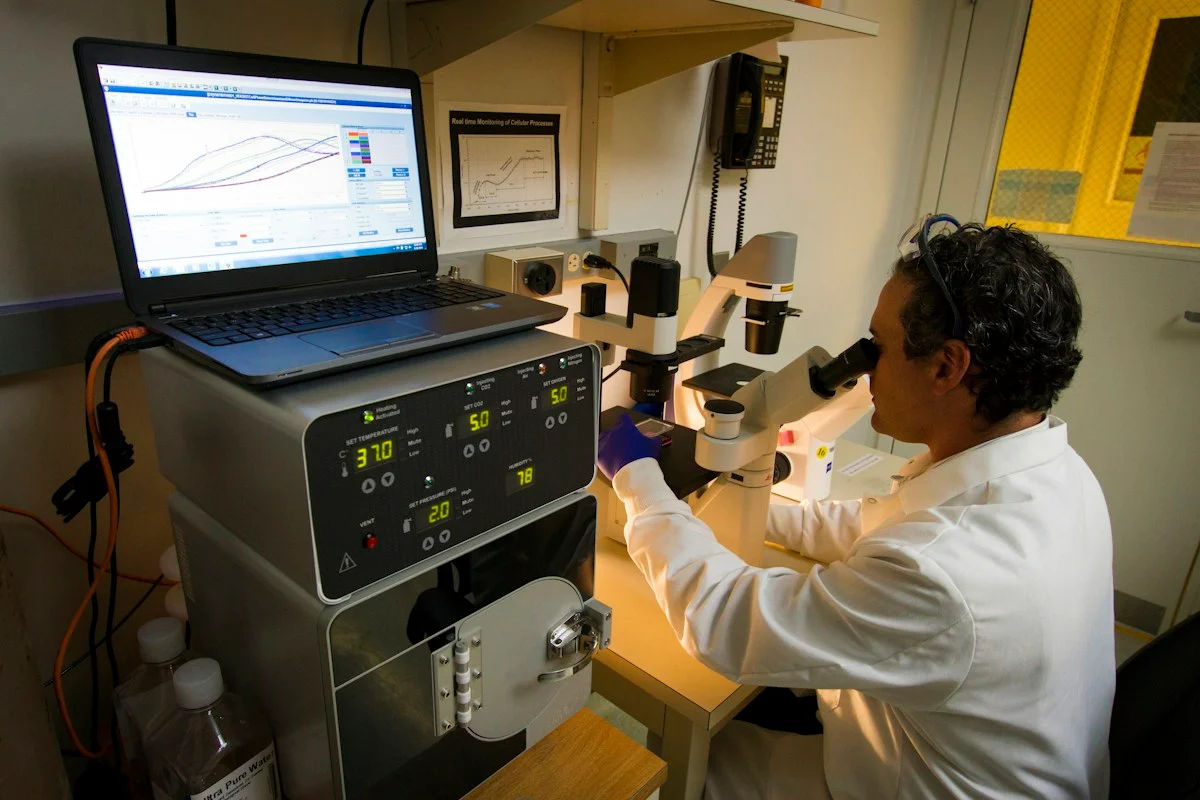
Illustrative photo · not a video frame
Google DeepMind · 1 min 52 sec · Background explainer
Protein folding explained
YouTube loads only when you choose; playback starts when you press play.
A short introduction to why a protein’s shape matters. It provides background for understanding what AI structure prediction contributes to biological research.
Evidence check: This is the developer’s explanation. Predicting a structure does not by itself establish a treatment’s safety or benefit for patients.
Published 2020-11-30. Source checked 14 October 2026. Check captions on the publisher’s video page.
Explore current researchContinue the story
Read next
Continue exploring materials science: compare the finding and its evidence limits.
Can a general-purpose LLM search crystal compositions?
In a closed computational benchmark, GPT-5.4 recovered 95.65% of 3,740 low-energy Elpasolite targets within 5,000 proposals. Iterative evaluator feedback drove the result; no new material was synthesised, and the approximate energy labels are not proof of stability or usefulness.
Read the next reportExplore the full source and evidence record
What this means for people
- A validated higher-temperature superconductor could reduce cooling demands in magnets, sensors and energy systems. This study does not yet establish such a material, and plutonium-based candidates would carry substantial safety and handling constraints.
Global context
The study comes from Iran and screens international crystallographic repositories. Candidate ranking can travel across borders, but access to plutonium compounds, specialist laboratories and independent replication capacity is highly uneven.
What the evidence does not yet show
- Peer reviewed
- 13,022 known superconductors
- 651-record high-temperature holdout
- 53,196 labelled non-superconductors
- No candidate synthesis
- No resistance or Meissner measurement
- No independent replication
- Peer-reviewed and earlier-manuscript candidate counts differ
- Publisher funding disclosure is internally inconsistent
What to watch next
- Independent reproduction
- Stability calculations
- Electron–phonon modelling
- Safe synthesis attempts
- Zero-resistance measurements
- Meissner-effect evidence
Living evidence record
Impact record IAI-18TUQYT
Evidence stage
Studied
Confidence
Supported
Reporting basis
Multi-source analysis
Independent or research support
Present
Record status
Monitoring
Last checked
29 October 2026
Source trail
2 direct sources across 1 source type.
People impact
Documented in this record.
Uncertainty
Limits and next checks are explicit.
Stages describe the evidence available—not whether a technology is good or bad. See the public method.
Evidence trail
Sources used for this report
Links checked 29 October 2026
Research question, topics and regions
AI screening of crystallographic databases for candidate high-temperature superconductors
Topics: Materials science · Superconductors · Machine learning · High-throughput screening · Experimental validation
Regions: Iran · Middle East · Global
This report is labelled multi-source analysis. We summarise and analyse source material in our own words; company statements remain attributed claims until independently supported. Translated summaries preserve the meaning of the original source and link back to it. Read our editorial standards.
Reader commentary
What does this mean where you are?
Tell us what you have seen at work, in your community or in everyday life. A question is welcome too. No account is needed; we review notes before publishing them.
Explore commentary across the portal →Published reader notes
0No published reader notes yet. You can start the evidence-led discussion above.
Prefer a private correction or response? Contact the newsroom.