AI use and lower symptom profiles moved together in a Chinese student survey—not causation
Rural-hukou students who had ever used one of nine AI tools were less likely to fall into elevated anxiety or depression profiles. The result is an association from a one-time survey, not evidence that AI use protects mental health or should be prescribed.
The short version
- What happened
- The analysis covered 1,529 rural-hukou students at three Zhejiang institutions; 1,110 (72.6%) reported ever using at least one of nine AI tools.
- Who it affects
- Students should not read the result as evidence that any AI tool will improve mental health. Universities can use it as a reason to ask how, why and with what effects students use AI while maintaining access to qualified human support.
- What remains unproven
- The cross-sectional design cannot determine direction or causality, and unmeasured confounding may remain after adjustment.
Keep in mind
The cross-sectional design cannot determine direction or causality, and unmeasured confounding may remain after adjustment.
The binary exposure combined a single trial with regular use and did not measure purpose, quality, intensity or harmful experiences.
Only 46 students were in the depression-predominant profile, making that estimate less stable despite sensitivity analysis.
The sample came from three Zhejiang institutions and excluded students with diagnosed or treated mental-health conditions, limiting generalisability.
The analysis did not use institutional clustering or survey weights.
Source analysis · 1 linked source. Primary analysed source date: 23 October 2026.
Keep following the evidence
Join The Impact Brief founding list for selected AI reports, their effect on people and the evidence limits. Read a sample first.
Read the full report · 3 min The evidence, methods, implications and limitations
A large survey found a consistent association, not a treatment effect
Researchers analysed 1,529 rural-hukou students from three Zhejiang institutions in September and October 2025. Depression and anxiety questionnaires produced three latent profiles: 896 students (58.6%) with low symptoms, 587 (38.4%) with anxiety-predominant symptoms and 46 (3.0%) with depression-predominant symptoms. The AI measure asked only whether a student had ever used at least one of nine tools.
After adjustment for measured demographic, educational and lifestyle variables, students reporting any AI use had lower odds of the anxiety-predominant profile than the low-symptom profile (OR 0.764, 95% CI 0.654–0.893), and lower odds of the depression-predominant profile (OR 0.239, 95% CI 0.101–0.566). A Firth-regression sensitivity analysis retained the same direction.[1]
Several explanations fit the same numbers
AI tools might help some students with study organisation, information access or social confidence. Equally, students with fewer symptoms may be more willing to try new tools, while family resources, digital literacy or campus support could influence both use and wellbeing. The survey cannot separate those pathways.
For clinicians and universities, the safe conclusion is narrow: AI use is part of students' environment and worth measuring more precisely. It is not evidence to recommend a chatbot for anxiety or depression. Future work needs prospective symptom tracking, purpose and frequency of use, tool quality, adverse experiences, and inclusion of students receiving mental-health care.[1]
The distinction that matters
Why the association does not show protection
Exposure and symptoms were measured together, so several causal directions remain possible.
AI helps
Tools support study or access
Symptoms could be lower after useful use
Symptoms shape use
Wellbeing affects willingness to try tools
Lower symptoms could precede AI use
Third factors
Resources or digital skills affect both
The association could persist without a direct effect
Watch the background, then check the evidence
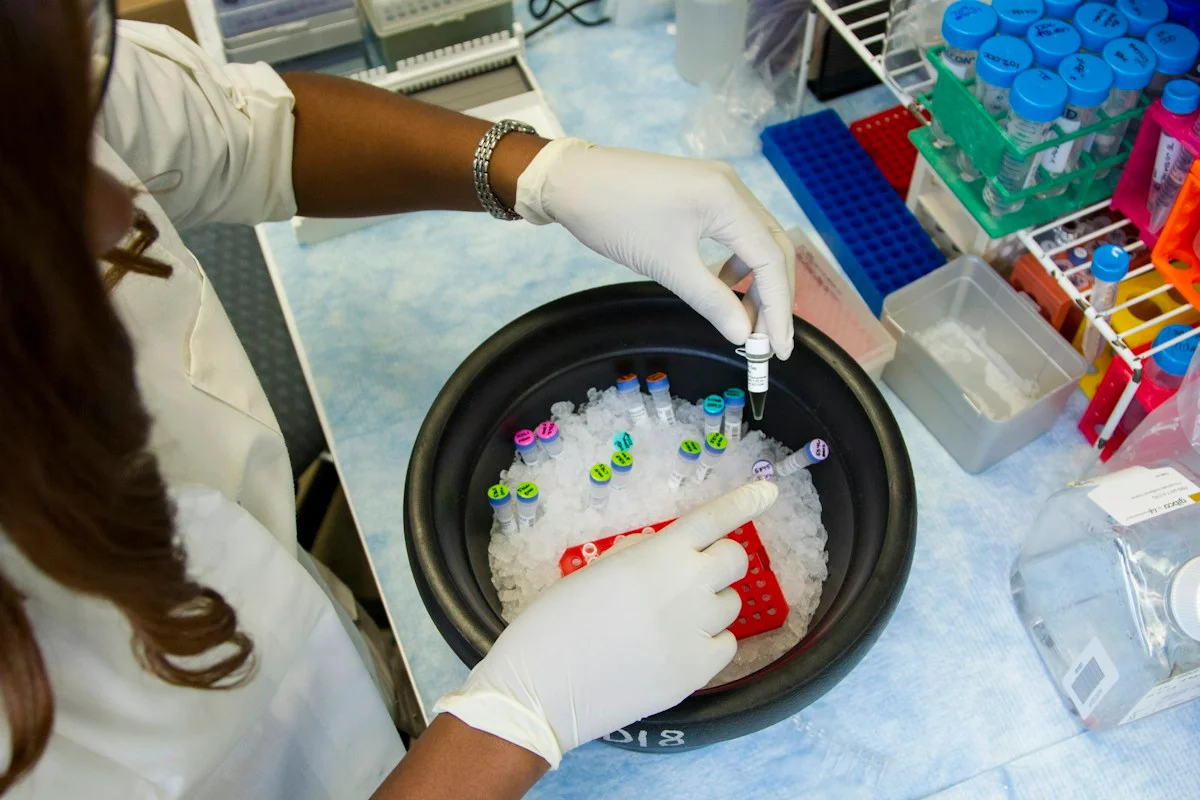
Illustrative photo · not a video frame
The Royal Society · 44 min 28 sec · Background explainer
Is this the AI future we want? | The Royal Society
YouTube loads only when you choose; playback starts when you press play.
A Royal Society discussion with Madhumita Murgia and biomedical engineer Alison Noble on AI’s potential in healthcare, science and culture, recorded at the 30 June 2026 event.
Evidence check: A discussion of opportunities and risks, including future possibilities. It is not evidence that every application described is available or clinically proven.
Published 2026-07-01. Source checked 14 October 2026. Check captions on the publisher’s video page.
Check the healthcare evidencePhoto: Daniel Sone / National Cancer Institute / Unsplash · Licence
Continue the story
Read next
Continue exploring depression: compare the finding and its evidence limits.
Do mental-health chatbots help university students?
A preregistered review found small short-term symptom advantages over waitlists or low-intensity materials, based on three depression and four anxiety comparisons. Two active conversational-control trials found no reliable added benefit, and certainty was low to very low.
Read the next reportExplore the full source and evidence record
What this means for people
- Students should not read the result as evidence that any AI tool will improve mental health. Universities can use it as a reason to ask how, why and with what effects students use AI while maintaining access to qualified human support.
Global context
Evidence about AI and student wellbeing is growing faster than evidence about cause and effect, especially outside wealthy urban populations. This study contributes a substantial rural Chinese sample while also showing why 'any use' is too blunt a measure for clinical or policy decisions.
What the evidence does not yet show
- The cross-sectional design cannot determine direction or causality, and unmeasured confounding may remain after adjustment.
- The binary exposure combined a single trial with regular use and did not measure purpose, quality, intensity or harmful experiences.
- Only 46 students were in the depression-predominant profile, making that estimate less stable despite sensitivity analysis.
- The sample came from three Zhejiang institutions and excluded students with diagnosed or treated mental-health conditions, limiting generalisability.
- The analysis did not use institutional clustering or survey weights.
What to watch next
- Prospective studies that establish whether AI use precedes symptom change
- Measures of use purpose, frequency, tool quality and adverse experiences
- Studies including students receiving mental-health diagnosis or treatment
- Independent replication across rural regions and countries
Living evidence record
Impact record IAI-1B4FY4M
Evidence stage
Studied
Confidence
Supported
Reporting basis
Source analysis
Independent or research support
Present
Record status
Monitoring
Last checked
24 October 2026
Source trail
1 direct source across 1 source type.
People impact
Documented in this record.
Uncertainty
Limits and next checks are explicit.
Stages describe the evidence available—not whether a technology is good or bad. See the public method.
Single-source reporting disclosure
This record analyses one direct source. It can establish what Psychology Research and Behavior Management published or reported, but it is not independent corroboration of every performance claim or predicted outcome. The confidence label will change only when broader evidence is added.
Evidence trail
Sources used for this report
Links checked 24 October 2026
Research question, topics and regions
Association between any AI-tool experience and depression-anxiety symptom profiles among rural university students
Topics: Student mental health · Rural students · AI use · Depression · Anxiety
Regions: China · East Asia · Higher education
This report is labelled source analysis. We summarise and analyse source material in our own words; company statements remain attributed claims until independently supported. Translated summaries preserve the meaning of the original source and link back to it. Read our editorial standards.
Reader commentary
What does this mean where you are?
Tell us what you have seen at work, in your community or in everyday life. A question is welcome too. No account is needed; we review notes before publishing them.
Explore commentary across the portal →Published reader notes
0No published reader notes yet. You can start the evidence-led discussion above.
Prefer a private correction or response? Contact the newsroom.