Oracle and AstraZeneca want AI to match trial patients—what has actually been agreed?
The companies plan to test AI and real-world data in trial recruitment, diagnosis and safety monitoring. Their term sheet is non-binding, and no model, sample or patient outcome has been reported.
The short version
- What happened
- AstraZeneca and Oracle have signed a non-binding term sheet to explore AI-supported trial recruitment, earlier diagnosis, drug-safety monitoring and real-world evidence—not an operational clinical system.
- Who it affects
- A successful system could help eligible patients hear about trials sooner, but only if clinicians retain oversight and the search does not systematically miss underrepresented groups.
- What remains unproven
- The agreement is non-binding and no operational deployment or completed project is reported.
The agreement is a plan to test, not evidence that the system works
AstraZeneca and Oracle have agreed to explore whether AI and real-world health data can find potential clinical-trial participants, support earlier diagnosis and monitor drug safety. The first proposed programme would focus on uncontrolled hypertension in Abu Dhabi with M42. Wider work could cover oncology, cardiovascular, renal, metabolic, respiratory, immunology and rare diseases across the United States, Middle East and Europe.[1][2][3]
Who it affects
A successful system could help eligible patients hear about trials sooner, but only if clinicians retain oversight and the search does not systematically miss underrepresented groups.[1][2][3]
Keep in mind
The agreement is non-binding and no operational deployment or completed project is reported.
No model, training data, patient denominator, comparator, accuracy, subgroup result or measured outcome is disclosed.
Both principal sources are partner announcements, and both companies have direct commercial interests; Reuters independently confirms the announcement but not effectiveness.
Multi-source analysis · 3 linked sources. Original source date: 20 October 2026.
Keep following the evidence
Join The Impact Brief founding list for selected AI reports, their effect on people and the evidence limits. Read a sample first.
Read the full report · 3 min The evidence, methods, implications and limitations
The agreement is a plan to test, not evidence that the system works
AstraZeneca and Oracle have agreed to explore whether AI and real-world health data can find potential clinical-trial participants, support earlier diagnosis and monitor drug safety. The first proposed programme would focus on uncontrolled hypertension in Abu Dhabi with M42. Wider work could cover oncology, cardiovascular, renal, metabolic, respiratory, immunology and rare diseases across the United States, Middle East and Europe.
What has been signed is a non-binding term sheet. The companies say they intend to create shared governance, reusable technical components and agreed outcome measures, but none is published. There is no named model, dataset size, enrolment denominator, comparator, accuracy result, budget or timetable. Claims about faster recruitment or better care are therefore goals, not measured findings.[1][2][3]
The useful test is whether patients are found safely and fairly
For patients, better matching could reduce the chance that an eligible person never hears about a suitable study. For trial teams, searching routine records could make recruitment less manual. But performance must be measured from the full eligible population: how many people are correctly identified, how many are missed, whether referrals turn into consent and enrolment, and whether access differs by age, sex, ethnicity, language, disability or care setting.
AstraZeneca says projects will use deidentified real-world data and that it will receive no patient-identifiable information. Each proposal must pass separate legal, privacy, regulatory, ethical and institutional review. Those are necessary safeguards, not proof of effectiveness. The companies have commercial interests in medicines, cloud infrastructure and health software. Public protocols, pre-specified outcomes and independent evaluation would be needed to show that the partnership improves recruitment or care without creating new data or selection risks.[1][2]
The distinction that matters
The proposed route from records to a trial referral
The partners describe a workflow they intend to explore; they have not published results from it.
Find
Search deidentified real-world records
Flag possible trial candidates
Check
Apply clinical and governance review
Confirm eligibility and seek consent
Learn
Measure enrolment and safety outcomes
Decide whether the approach should scale
Watch the background, then check the evidence
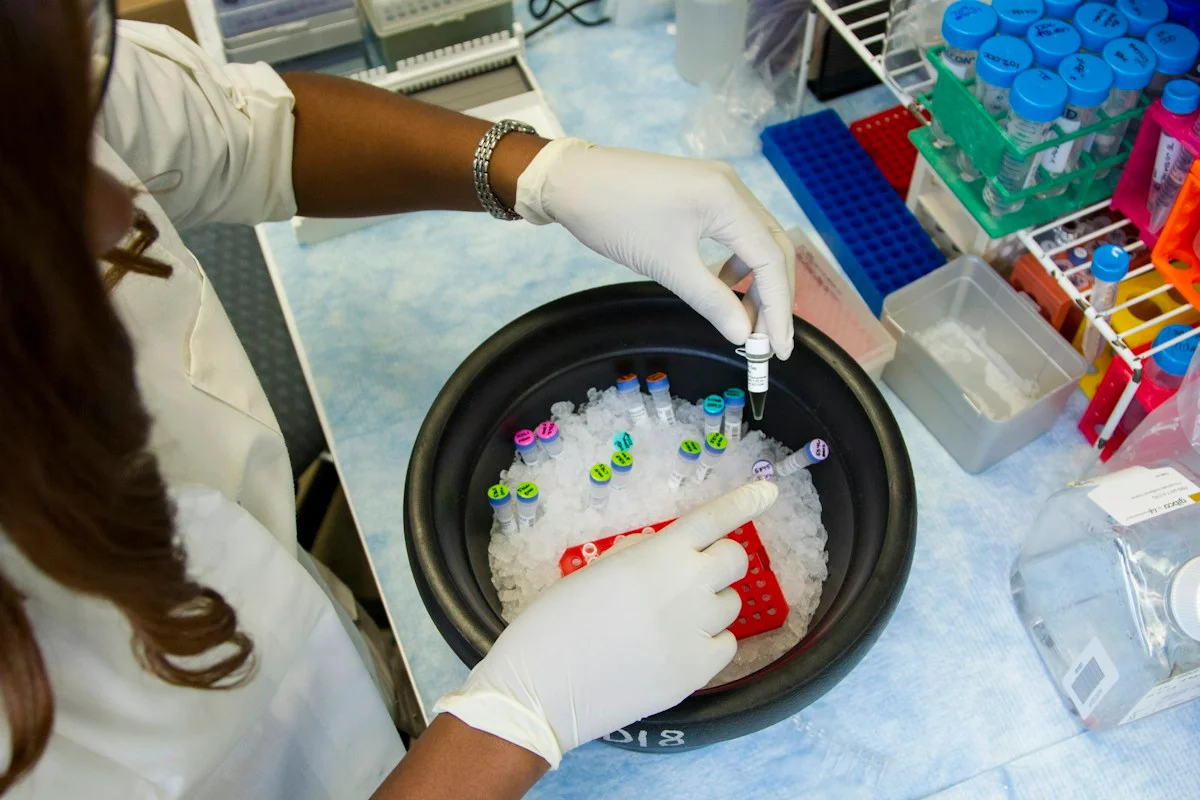
Illustrative photo · not a video frame
The Royal Society · 44 min 28 sec · Background explainer
Is this the AI future we want? | The Royal Society
YouTube loads only when you choose; playback starts when you press play.
A Royal Society discussion with Madhumita Murgia and biomedical engineer Alison Noble on AI’s potential in healthcare, science and culture, recorded at the 30 June 2026 event.
Evidence check: A discussion of opportunities and risks, including future possibilities. It is not evidence that every application described is available or clinically proven.
Published 2026-07-01. Source checked 14 October 2026. Check captions on the publisher’s video page.
Check the healthcare evidencePhoto: Daniel Sone / National Cancer Institute / Unsplash · Licence
Evidence check
The agreement is non-binding and no operational deployment or completed project is reported.
No model, training data, patient denominator, comparator, accuracy, subgroup result or measured outcome is disclosed.
Both principal sources are partner announcements, and both companies have direct commercial interests; Reuters independently confirms the announcement but not effectiveness.
Reporting basis: Multi-source analysis. Original source date: 20 October 2026.
Continue the story
Read next
Continue exploring clinical trials: compare the finding and its evidence limits.
Can HHS cut clinical trials below four years without weakening the evidence?
ARPA-H wants predictive models, common controls, continuous statistics and agentic operations to replace fragmented trial phases. Three linked projects carry awards of up to $100.03 million, but SURPASS is still an open solicitation and no shortened trial or patient benefit has been demonstrated.
Read the next reportExplore the full source and evidence record
What this means for people
- A successful system could help eligible patients hear about trials sooner, but only if clinicians retain oversight and the search does not systematically miss underrepresented groups.
- People whose records are used need clear governance over data access, reuse, error correction and consent; deidentification alone does not establish clinical benefit.
Global context
Health systems are testing record-search and patient-matching tools because recruitment delays can slow trials and exclude eligible people. Rules, data quality and access patterns vary by country, so results from Abu Dhabi would not automatically transfer to the US or Europe.
What the evidence does not yet show
- The agreement is non-binding and no operational deployment or completed project is reported.
- No model, training data, patient denominator, comparator, accuracy, subgroup result or measured outcome is disclosed.
- Both principal sources are partner announcements, and both companies have direct commercial interests; Reuters independently confirms the announcement but not effectiveness.
What to watch next
- A registered protocol and named outcome measures for the Abu Dhabi hypertension programme
- Sensitivity, specificity and missed-patient rates using a clearly stated eligible denominator
- Subgroup results, clinician workload, consent and enrolment outcomes, and independent privacy or bias review
Living evidence record
Impact record IAI-006JRAN
Evidence stage
Announced
Confidence
Corroborated
Reporting basis
Multi-source analysis
Independent or research support
Present
Record status
Monitoring
Last checked
20 October 2026
Source trail
3 direct sources across 2 source types.
People impact
Documented in this record.
Uncertainty
Limits and next checks are explicit.
Stages describe the evidence available—not whether a technology is good or bad. See the public method.
Evidence trail
Sources used for this report
Links checked 20 October 2026
Research question, topics and regions
Topics: Clinical trials · Patient matching · Real-world data · Drug safety · Health data governance
Regions: United Kingdom · United States · United Arab Emirates · Middle East · Europe
This report is labelled multi-source analysis. We summarise and analyse source material in our own words; company statements remain attributed claims until independently supported. Translated summaries preserve the meaning of the original source and link back to it. Read our editorial standards.
Reader commentary
What does this mean where you are?
Tell us what you have seen at work, in your community or in everyday life. A question is welcome too. No account is needed; we review notes before publishing them.
Explore commentary across the portal →Published reader notes
0No published reader notes yet. You can start the evidence-led discussion above.
Prefer a private correction or response? Contact the newsroom.