Can a bird-sound model hear threatened fish spawning? It caught only about half the events
Researchers reused embeddings from seven pretrained sound models to detect twaite shad splashes in UK and Belgian river recordings. BirdNET transferred best, but the leading classifier reached F1=0.69 and produced more false alarms in a preliminary continuous-recording check.
The short version
- What happened
- Researchers manually annotated 28 hours, 40 minutes and 38 seconds of recordings from UK and Belgian rivers, identifying 351 twaite shad splashing events collected between 2022 and 2024.
- Who it affects
- For river managers and field ecologists, a reliable detector could reduce the time spent listening to long recordings and make more sites practical to monitor. At the current error level, human review remains necessary.
- What remains unproven
- 351 positive events from recordings collected in three rivers during 2022–2024
Keep in mind
351 positive events from recordings collected in three rivers during 2022–2024
Selected thresholds maximised F1 on the available test data
Only a qualitative five-hour check on continuous recordings
Elevated false positives in more realistic rare-event audio
No new-river external validation or population-level outcome
No measured staff-time saving or conservation decision
Scholarly book chapter; journal peer-review status is not described
Source analysis · 1 linked source. Primary analysed source date: 28 October 2026.
Keep following the evidence
Join The Impact Brief founding list for selected AI reports, their effect on people and the evidence limits. Read a sample first.
Read the full report · 3 min The evidence, methods, implications and limitations

A model trained to hear birds supplied the most useful sound features
Twaite shad males make distinctive surface splashes while spawning, giving conservation teams a non-invasive way to locate activity—if they can separate rare splashes from rain, boats, birds and moving water. Researchers recorded known spawning rivers in the UK and Belgium and manually labelled 351 events across 28 hours, 40 minutes and 38 seconds of audio.
They tested embeddings—compact numerical sound features—from seven pretrained models and trained simple classifiers on top. BirdNET, originally built for bird calls, supplied the strongest transferable representation. The best training-data configuration reached an F1 score of 0.69 on a held-out test set with ten noise clips for every splash clip. F1 balances missed events and false alarms; it does not say the detector found 69% of all spawning activity in a river.[1]
The rare-event problem remains visible in the errors
The selected classifier recorded 41 true positives and eight false positives at its chosen threshold. Other configurations caught 60 or 64 events but produced 79 or 164 false positives. Across the embedding comparison, even BirdNET correctly identified only a little over half of positive sound events. Noise from water and distant or masked splashes drove both kinds of error.
The team also ran the classifiers over five hours of continuous field audio. The relative ranking looked similar, but false positives increased; the check was qualitative rather than a separate labelled validation set. The chapter therefore supports a promising annotation aid, not autonomous population monitoring. Tests on new rivers, seasons and equipment—with a pre-set threshold and a complete human-reviewed denominator—would show whether the tool can reduce staff time without hiding real spawning activity.[1]
The distinction that matters
Three evidence layers behind the detector
Each layer answers a different question; the final operational claim is still unresolved.
Annotated audio
351 splashes were labelled across 28 h 40 min of recordings
A small, real river dataset for training and testing
Held-out clips
Seven embedding models and seven dataset variants were compared
Best reported F1 was 0.69
Continuous field audio
Five unedited hours were checked qualitatively
More false alarms; no deployment estimate yet
Watch the background, then check the evidence
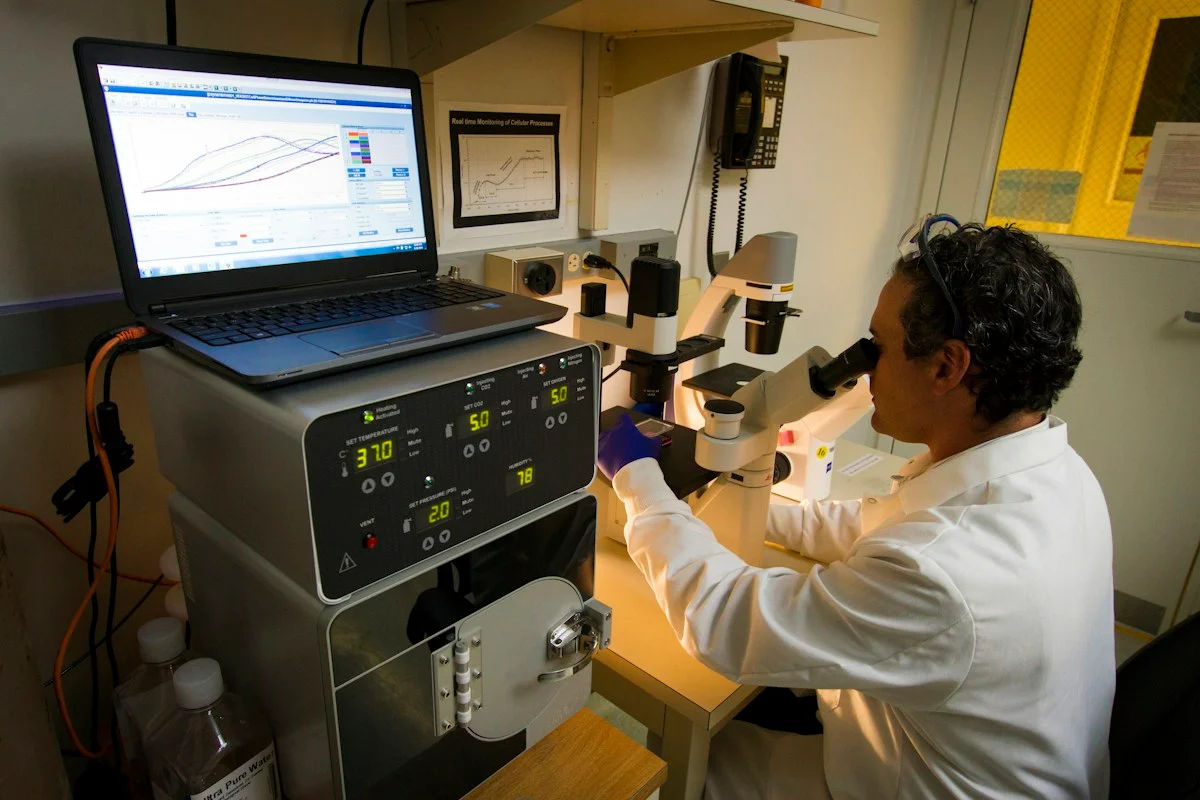
Illustrative photo · not a video frame
Google DeepMind · 1 min 52 sec · Background explainer
Protein folding explained
YouTube loads only when you choose; playback starts when you press play.
A short introduction to why a protein’s shape matters. It provides background for understanding what AI structure prediction contributes to biological research.
Evidence check: This is the developer’s explanation. Predicting a structure does not by itself establish a treatment’s safety or benefit for patients.
Published 2020-11-30. Source checked 14 October 2026. Check captions on the publisher’s video page.
Explore current researchContinue the story
Read next
Continue exploring environmental monitoring: compare the finding and its evidence limits.
Can AI water-quality models travel between rivers and sensors? A 91-study review finds no common benchmark
A peer-reviewed systematic review found rapid experimentation but weak comparability: most studies used one site or data source, reporting varied widely, and the field still lacks a shared benchmark for testing whether models transfer to new waters and sensors.
Read the next reportExplore the full source and evidence record
What this means for people
- For river managers and field ecologists, a reliable detector could reduce the time spent listening to long recordings and make more sites practical to monitor. At the current error level, human review remains necessary.
Global context
Twaite shad range from the north-eastern Atlantic to the Mediterranean, but river acoustics, equipment, spawning density and background noise vary. A detector trained on the Severn, Teme and Scheldt needs external validation before use in other catchments or as evidence of population recovery.
What the evidence does not yet show
- 351 positive events from recordings collected in three rivers during 2022–2024
- Selected thresholds maximised F1 on the available test data
- Only a qualitative five-hour check on continuous recordings
- Elevated false positives in more realistic rare-event audio
- No new-river external validation or population-level outcome
- No measured staff-time saving or conservation decision
- Scholarly book chapter; journal peer-review status is not described
What to watch next
- A fully labelled continuous-audio validation set
- Tests on new rivers, seasons and recorder types
- Pre-registered thresholds and uncertainty estimates
- Human-review time saved per hour of recording
- Evidence that detections improve spawning-site or population estimates
Living evidence record
Impact record IAI-0KCOJ0U
Evidence stage
Studied
Confidence
Supported
Reporting basis
Source analysis
Independent or research support
Present
Record status
Monitoring
Last checked
28 October 2026
Source trail
1 direct source across 1 source type.
People impact
Documented in this record.
Uncertainty
Limits and next checks are explicit.
Stages describe the evidence available—not whether a technology is good or bad. See the public method.
Single-source reporting disclosure
This record analyses one direct source. It can establish what Springer Nature / The Effects of Noise on Aquatic Life IV published or reported, but it is not independent corroboration of every performance claim or predicted outcome. The confidence label will change only when broader evidence is added.
Evidence trail
Sources used for this report
Links checked 28 October 2026
Research question, topics and regions
Whether embeddings from pretrained sound models can support automatic detection of rare twaite shad spawning splashes in noisy river recordings
Topics: Biodiversity · Bioacoustics · Transfer learning · Freshwater conservation · Environmental monitoring
Regions: United Kingdom · Belgium · Netherlands · Europe
This report is labelled source analysis. We summarise and analyse source material in our own words; company statements remain attributed claims until independently supported. Translated summaries preserve the meaning of the original source and link back to it. Read our editorial standards.
Reader commentary
What does this mean where you are?
Tell us what you have seen at work, in your community or in everyday life. A question is welcome too. No account is needed; we review notes before publishing them.
Explore commentary across the portal →Published reader notes
0No published reader notes yet. You can start the evidence-led discussion above.
Prefer a private correction or response? Contact the newsroom.