$20m renewed for AI and healthy ageing—what will patients actually see?
Johns Hopkins says a five-year US award will fund AI, sensors and digital-health research for older adults. The decision expands a research pipeline; it is not evidence that any tool improves diagnosis, independence or care.
The short version
3 key points
- What changed
- Johns Hopkins says the National Institute on Aging renewed its AI and Technology Collaboratory with $20 million over five years.
- Why it matters
- Older adults, families and care teams may eventually gain better tools for monitoring mobility, cognition and functional risk. For now, they should not treat the award as proof that any named AI system can diagnose dementia, prevent falls or improve independence.
- What to watch
- Named pilot awards, protocols, participant numbers and comparators from the new application round
The award keeps a research pipeline open for another five years
Johns Hopkins University says its Artificial Intelligence and Technology Collaboratory for Aging Research has received a five-year, $20 million renewal from the US National Institute on Aging. The official programme identifies the award as grant 2P30AG073104. Its remit is broad: AI and machine learning, computer vision, wearables, conversational speech analysis and other digital-health tools aimed at healthy ageing, rural health equity, Alzheimer’s disease and related dementias.[1][2][3]
Who it affects
Older adults, families and care teams may eventually gain better tools for monitoring mobility, cognition and functional risk. For now, they should not treat the award as proof that any named AI system can diagnose dementia, prevent falls or improve independence.[1][2][3]
Keep in mind
The central evidence is a Johns Hopkins announcement and its own programme pages; the sources are not independent of the funded institution.
The announcement reports no new participant denominator, comparator, clinical outcome, uncertainty estimate or adverse-event result.
The $20 million covers a five-year programme rather than a single validated product, and project-level allocations are not provided.
Source analysis · 3 linked sources. Original source date: 16 October 2026.
Read the full report · 4 min The evidence, methods, implications and limitations
The award keeps a research pipeline open for another five years
Johns Hopkins University says its Artificial Intelligence and Technology Collaboratory for Aging Research has received a five-year, $20 million renewal from the US National Institute on Aging. The official programme identifies the award as grant 2P30AG073104. Its remit is broad: AI and machine learning, computer vision, wearables, conversational speech analysis and other digital-health tools aimed at healthy ageing, rural health equity, Alzheimer’s disease and related dementias.
The renewal is a material funding decision, not a research finding. It finances infrastructure, investigators and future pilot projects. The university says the next pilot competition opens on 19 October to researchers from Johns Hopkins, other academic institutions and industry. Applications may lead to prototypes and studies, but the announcement does not name the next awardees, allocate the $20 million project by project or set out a common clinical endpoint for the programme.[1][2][3]
The practical promise is earlier signals and better support—not an approved product
The university points to earlier programme work on voice technology for possible cognitive impairment, wearables and smart insoles for mobility and fall risk, and computer vision combined with robots to detect agitation in nursing-home residents. Under the renewal, teams plan further work on frailty, resilience, mobility, cognition and functional risk. For an older person or caregiver, those aims matter because useful tools could eventually identify changes sooner, support independence or help staff notice deterioration between appointments.
None of those benefits is established by the funding decision. The announcement supplies no sample sizes, control groups, diagnostic accuracy, false-alarm rates, safety results or evidence that a tool changed care. It also does not say which systems have regulatory clearance or are ready for routine use. Commercialisation support is part of the programme, creating a legitimate interest in moving inventions towards market; that makes transparent validation and conflict disclosure especially important as individual projects mature.[1][2]
The distinction that matters
How the funding could become patient evidence
The award supports a sequence of work. Each later stage needs its own evidence before a tool should influence care.
Programme
$20m over five years
Research infrastructure and pilot funding continue
Pilots
Build and test defined tools
Feasibility, accuracy, safety and burden can be measured
Clinical evidence
Independent multi-site evaluation
Only then can effects on care and outcomes be judged
What would turn the award into evidence
The next evidence should come from the projects, not the size of the grant. Each pilot needs a registered question, a defined population and comparator, enough participants to estimate uncertainty, and outcomes that matter to older adults and caregivers. A speech model should be tested across accents, languages and recording conditions; a mobility system should show whether alerts are accurate and actionable; a care robot should be evaluated for privacy, consent, burden and unintended harm as well as technical performance.
Independent, multi-site testing would strengthen the case beyond a single university network. So would clear reporting on recruitment, exclusions, subgroup performance, data governance, adverse events and whether clinicians or families actually change decisions. Projects should also explain how older people and caregivers shaped the research question, consent process and definition of a useful result. Until such results appear, the best reading is precise: US public funding has extended a substantial research platform and opened a new pilot round. It has not yet demonstrated better ageing or dementia outcomes.[1][2][3]
Watch the background, then check the evidence
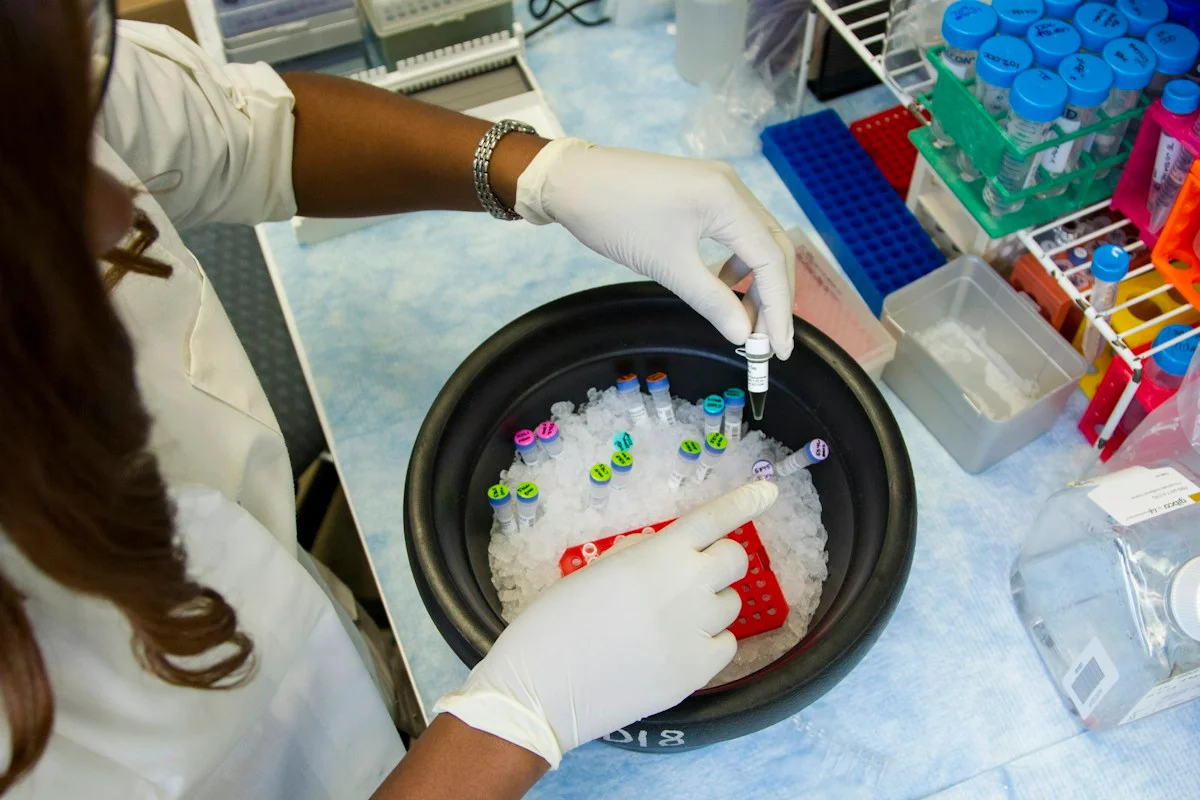
Illustrative photo · not a video frame
The Royal Society · 44 min 28 sec · Background explainer
Is this the AI future we want? | The Royal Society
YouTube loads only when you choose; playback starts when you press play.
A Royal Society discussion with Madhumita Murgia and biomedical engineer Alison Noble on AI’s potential in healthcare, science and culture, recorded at the 30 June 2026 event.
Evidence check: A discussion of opportunities and risks, including future possibilities. It is not evidence that every application described is available or clinically proven.
Published 2026-07-01. Source checked 14 October 2026. Check captions on the publisher’s video page.
Check the healthcare evidencePhoto: Daniel Sone / National Cancer Institute / Unsplash · Licence
Evidence check
The central evidence is a Johns Hopkins announcement and its own programme pages; the sources are not independent of the funded institution.
The announcement reports no new participant denominator, comparator, clinical outcome, uncertainty estimate or adverse-event result.
The $20 million covers a five-year programme rather than a single validated product, and project-level allocations are not provided.
Reporting basis: Source analysis. Original source date: 16 October 2026.
Continue the story
Read next
Also about digital health
Did longer AI-assisted Parkinson’s rehab improve movement?
No clear motor advantage emerged between one, two and three months of home training. The peer-reviewed Chinese trial randomized 120 people, analysed 71 and had no usual-care group, so its exploratory cognitive signal cannot establish benefit.
Read the 6 min reportAlso about digital health
Can AI estimate survival after a Parkinson’s diagnosis?
A peer-reviewed Chinese registry study compared four survival models in 3,148 people with Parkinson’s disease. A transparent Cox model matched the machine-learning alternatives, but validation stayed within the same registry and no clinical-impact study was performed.
Read the 9 min reportExplore the full source and evidence record
What this means for people
- Older adults, families and care teams may eventually gain better tools for monitoring mobility, cognition and functional risk. For now, they should not treat the award as proof that any named AI system can diagnose dementia, prevent falls or improve independence.
Global context
The programme is US-funded and based at Johns Hopkins. Ageing, dementia and rural access are global concerns, but tools developed through it will still need validation across languages, health systems, care settings and populations before findings can travel.
What the evidence does not yet show
- The central evidence is a Johns Hopkins announcement and its own programme pages; the sources are not independent of the funded institution.
- The announcement reports no new participant denominator, comparator, clinical outcome, uncertainty estimate or adverse-event result.
- The $20 million covers a five-year programme rather than a single validated product, and project-level allocations are not provided.
What to watch next
- Named pilot awards, protocols, participant numbers and comparators from the new application round
- Independent multi-site validation across languages, rural settings and different care systems
- Patient and caregiver outcomes, false alarms, adverse events, privacy and consent reporting
- Regulatory status and conflict disclosures for projects moving towards commercial use
Living evidence record
Impact record IAI-1DWO3RD
Evidence stage
Announced
Confidence
Supported
Reporting basis
Source analysis
Independent or research support
Not yet
Record status
Monitoring
Last checked
19 October 2026
Source trail
3 direct sources across 2 source types.
People impact
Documented in this record.
Uncertainty
Limits and next checks are explicit.
Stages describe the evidence available—not whether a technology is good or bad. See the public method.
Related-source reporting disclosure
This record analyses 3 linked source records around the same underlying development. The extra records add method, date or context, but they do not by themselves constitute independent replication of every performance claim or predicted outcome.
Evidence trail
Sources used for this report
Links checked 19 October 2026
Research question, topics and regions
US research infrastructure for AI and technology in ageing
Topics: Healthy ageing · Alzheimer’s disease · Digital health · Research funding · Rural health
Regions: United States · North America · Global
This report is labelled source analysis. We summarise and analyse source material in our own words; company statements remain attributed claims until independently supported. Translated summaries preserve the meaning of the original source and link back to it. Read our editorial standards.
The Impact Brief · Free
Keep following the stories that matter to you.
Get our weekday briefing on what changed and why it matters. Choose your topics below.
Reader commentary
What does this mean where you are?
Tell us what you have seen at work, in your community or in everyday life. A question is welcome too. No account is needed; we review notes before publishing them.
Explore commentary across the portal →Published reader notes
0No published reader notes yet. You can start the evidence-led discussion above.
Prefer a private correction or response? Contact the newsroom.