Most kidney-AI ‘prediction’ studies detect disease already present—what does that mean for patients?
A peer-reviewed review of 169 studies found that only 46 tested a genuinely future outcome, four used an independent external cohort and none measured prospective clinical impact.
The short version
3 key points
- What changed
- Of 169 primary studies, 122 classified current kidney-disease status and only 46 contained a clearly future-oriented prediction component.
- Why it matters
- Patients should not assume a model labelled predictive has been shown to warn of kidney decline before it happens.
- What to watch
- Independent external and later-period validation of genuinely future-oriented kidney-risk models
The word “prediction” often hid a different task
Most published artificial-intelligence research described as predicting chronic kidney disease was actually recognising disease at roughly the same time it was measured. That is the central finding of a peer-reviewed systematic review published on 19 October. The authors examined 169 primary studies from 2021 to 2026 and classified a study as genuinely predictive only when it had an identifiable baseline, predictors available by that point, a later renal outcome and a meaningful prediction horizon.[1]
Who it affects
Patients should not assume a model labelled predictive has been shown to warn of kidney decline before it happens.[1]
Keep in mind
This is a systematic review of published studies, not a prospective trial of a kidney-AI system.
The search used Scopus only and was restricted to English-language studies, so relevant evidence may have been missed.
Heterogeneous tasks, datasets, outcomes and metrics prevented a pooled performance estimate.
Incomplete reporting in primary studies sometimes limited assessment of timing, preprocessing and validation.
The review found no prospective clinical-impact study and does not establish that every individual model is ineffective.
Source analysis · 1 linked source. Original source date: 19 October 2026.
Read the full report · 4 min The evidence, methods, implications and limitations
The word “prediction” often hid a different task
Most published artificial-intelligence research described as predicting chronic kidney disease was actually recognising disease at roughly the same time it was measured. That is the central finding of a peer-reviewed systematic review published on 19 October. The authors examined 169 primary studies from 2021 to 2026 and classified a study as genuinely predictive only when it had an identifiable baseline, predictors available by that point, a later renal outcome and a meaningful prediction horizon.
By that rule, 122 studies—72.2%—addressed current-state detection or classification. Forty-six, or 27.2%, included a future-oriented prediction component. This distinction matters for patients and clinicians: identifying patterns associated with kidney disease already present is not the same as estimating who will develop disease, deteriorate, need dialysis or reach kidney failure in time to change care.[1]
Strong-looking scores rarely travelled far
The review found a thin validation trail behind many performance claims. Of 169 studies, 136 lacked a clearly identifiable independent holdout or external validation strategy under the authors' coding rules. Seventeen used geographic or institutional external validation, while only four used an independent external cohort or dataset. None performed a distinct temporal validation using data from a later calendar period.
Calibration—whether predicted risks match observed risks—was assessed in 12 studies. Only one study explicitly evaluated clinical utility using decision-curve or net-benefit analysis. Nine presented a prototype or tool, one showed retrospective operational use and none reported a prospective clinical-impact study. The stronger future-oriented subset did somewhat better on external validation and calibration, but the review still found no direct test of whether an AI warning improves a clinical decision. The literature therefore does not yet show that deploying these systems improves referrals, treatment decisions, kidney outcomes or patient experience.[1]
The distinction that matters
Three different claims that can all be called “prediction”
The review separates recognition of disease now from forecasting an outcome that happens later.
Current-state classification
Use data measured around diagnosis
Detect disease already present
Future-oriented prediction
Use baseline data before a later outcome
Estimate later kidney risk
Clinical impact
Test decisions and patient outcomes prospectively
Not demonstrated in the review
A useful warning, not a verdict on every model
Using PROBAST+AI, the reviewers judged 156 studies at high overall risk of bias during development and 164 during evaluation; no study achieved an overall low-risk judgement. Repeated reuse of public benchmark data also made apparently separate results less independent. Near-perfect classification on a familiar dataset may demonstrate that its labels are separable, but it does not establish that a model will work in a different clinic or forecast a future event.
The review has limits of its own. It searched Scopus only, included English-language studies and could not pool performance because tasks, datasets and outcomes differed. It received no declared financial support, and the authors reported no commercial conflicts. Its counts describe the papers that met the predefined search and coding rules, not every kidney-AI study ever produced. The next evidence that would change the assessment is prospective testing across later time periods and independent populations, with calibration, established clinical comparators and measured patient or service outcomes. Until then, kidney-AI “prediction” should be read as a task label—not proof of useful early warning.[1]
Watch the background, then check the evidence
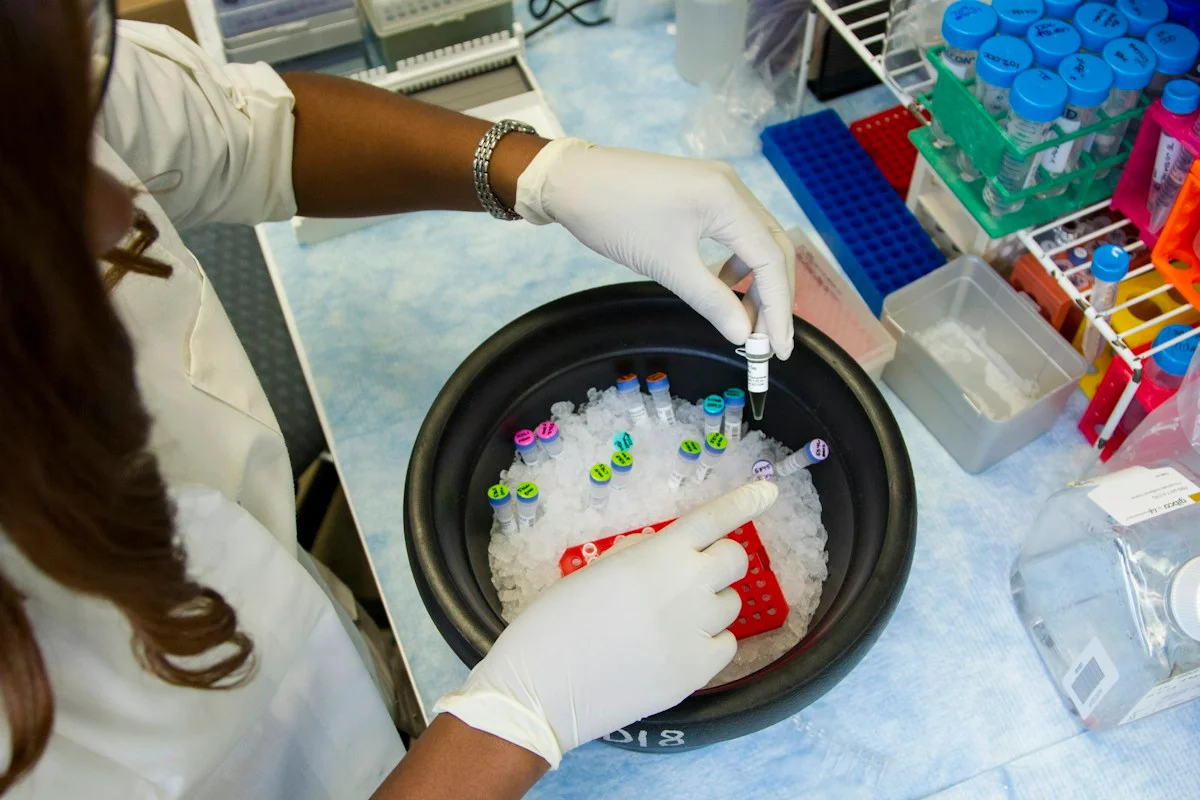
Illustrative photo · not a video frame
The Royal Society · 44 min 28 sec · Background explainer
Is this the AI future we want? | The Royal Society
YouTube loads only when you choose; playback starts when you press play.
A Royal Society discussion with Madhumita Murgia and biomedical engineer Alison Noble on AI’s potential in healthcare, science and culture, recorded at the 30 June 2026 event.
Evidence check: A discussion of opportunities and risks, including future possibilities. It is not evidence that every application described is available or clinically proven.
Published 2026-07-01. Source checked 14 October 2026. Check captions on the publisher’s video page.
Check the healthcare evidencePhoto: Daniel Sone / National Cancer Institute / Unsplash · Licence
Evidence check
This is a systematic review of published studies, not a prospective trial of a kidney-AI system.
The search used Scopus only and was restricted to English-language studies, so relevant evidence may have been missed.
Heterogeneous tasks, datasets, outcomes and metrics prevented a pooled performance estimate.
Incomplete reporting in primary studies sometimes limited assessment of timing, preprocessing and validation.
The review found no prospective clinical-impact study and does not establish that every individual model is ineffective.
Reporting basis: Source analysis. Original source date: 19 October 2026.
Continue the story
Read next
Also about medical ai
Can AI flag a longer ICU stay?
A peer-reviewed model separated longer-stay risk across 5,281 retrospective sepsis admissions in one US development cohort and two Korean external cohorts. Its AUROC fell from 0.848 internally to 0.781 at the smaller Korean site, and no prospective study tested whether alerts improve care or capacity.
Read the 7 min reportAlso about clinical prediction
Can AI predict risks before thymic-tumour surgery?
Models trained on 726 Chinese patients estimated complications, longer stays and severe pain before surgery. External AUCs of 0.660–0.776 make this promising risk support—not evidence for automated care decisions.
Read the 7 min reportExplore the full source and evidence record
What this means for people
- Patients should not assume a model labelled predictive has been shown to warn of kidney decline before it happens.
- Clinicians and health-system buyers need external validation, calibration and workflow evidence before using a model to change referrals or treatment.
- Researchers can strengthen the field by defining baseline and prediction horizons, reserving independent cohorts and measuring clinical utility.
Global context
The authors are affiliated with institutions in Nigeria, China, Thailand, Morocco, New Zealand and Sweden, while the underlying studies span multiple settings. The review's single-database, English-language search means its map is broad but not exhaustive, particularly for work indexed elsewhere or published in other languages.
What the evidence does not yet show
- This is a systematic review of published studies, not a prospective trial of a kidney-AI system.
- The search used Scopus only and was restricted to English-language studies, so relevant evidence may have been missed.
- Heterogeneous tasks, datasets, outcomes and metrics prevented a pooled performance estimate.
- Incomplete reporting in primary studies sometimes limited assessment of timing, preprocessing and validation.
- The review found no prospective clinical-impact study and does not establish that every individual model is ineffective.
What to watch next
- Independent external and later-period validation of genuinely future-oriented kidney-risk models
- Calibration and decision-curve analysis alongside discrimination metrics
- Comparisons with established clinical risk equations and clinician judgement
- Prospective trials measuring referrals, treatment, kidney outcomes, workload and inequity
Living evidence record
Impact record IAI-1S6KMPI
Evidence stage
Studied
Confidence
Supported
Reporting basis
Source analysis
Independent or research support
Present
Record status
Monitoring
Last checked
19 October 2026
Source trail
1 direct source across 1 source type.
People impact
Documented in this record.
Uncertainty
Limits and next checks are explicit.
Stages describe the evidence available—not whether a technology is good or bad. See the public method.
Single-source reporting disclosure
This record analyses one direct source. It can establish what Frontiers in Artificial Intelligence published or reported, but it is not independent corroboration of every performance claim or predicted outcome. The confidence label will change only when broader evidence is added.
Evidence trail
Sources used for this report
Links checked 19 October 2026
Research question, topics and regions
Whether published kidney-AI studies predict future disease or mainly classify disease that is already present
Topics: Chronic kidney disease · Clinical prediction · External validation · Risk of bias · Medical AI
Regions: Global health · Nigeria · China · Thailand · Morocco · New Zealand · Sweden
This report is labelled source analysis. We summarise and analyse source material in our own words; company statements remain attributed claims until independently supported. Translated summaries preserve the meaning of the original source and link back to it. Read our editorial standards.
The Impact Brief · Free
Keep following the stories that matter to you.
Get our weekday briefing on what changed and why it matters. Choose your topics below.
Reader commentary
What does this mean where you are?
Tell us what you have seen at work, in your community or in everyday life. A question is welcome too. No account is needed; we review notes before publishing them.
Explore commentary across the portal →Published reader notes
0No published reader notes yet. You can start the evidence-led discussion above.
Prefer a private correction or response? Contact the newsroom.