Can a global check make AI medication lists less error-prone?
An exact decoder modestly improved agreement with recorded prescriptions while holding drug scores, list length and interaction budget fixed. It used one old US intensive-care dataset and a simplified interaction graph, so clinical safety remains untested.
The short version
- What happened
- The comparison used about 14,000 MIMIC-III visits, 151 drugs and a 1,425-edge interaction graph, split 4:1:1 with patients kept separate.
- Who it affects
- Clinicians and patients could benefit if decision-support systems preserve more useful options while respecting richer safety rules, but this experiment should not be used to recommend, add or remove any medication.
- What remains unproven
- This is an unreviewed retrospective benchmark on one dataset, one frozen scorer and one binary interaction graph.
Keep in mind
This is an unreviewed retrospective benchmark on one dataset, one frozen scorer and one binary interaction graph.
The fixed list length averages nearly 27 medicines and does not model whether a smaller or larger regimen is appropriate.
The study measures agreement with recorded medication sets, not prescribing quality, adverse events or patient benefit.
The corresponding author is affiliated with Optum; no separate funding or competing-interest statement is reported.
Source analysis · 1 linked source. Original source date: 21 October 2026.
Keep following the evidence
Join The Impact Brief founding list for selected AI reports, their effect on people and the evidence limits. Read a sample first.
Read the full report · 3 min The evidence, methods, implications and limitations

The experiment isolated the final selection step
Medication recommenders often score drugs separately, then remove interacting pairs one by one. That local repair can keep one highly connected drug and force several better-supported alternatives out. The researchers instead used mixed-integer linear programming to choose the whole set jointly. Every decoder received the same frozen FLAME scores, predicted list length and drug-interaction budget, so the comparison focused on search rather than retraining.
The data were roughly 14,000 de-identified visits from MIMIC-III, divided 4:1:1 into train, validation and test without shared patients. The vocabulary contained 151 drugs and a TWOSIDES-derived graph with 1,425 interaction edges. At the strict target, global decoding scored 0.4027 Jaccard against recorded medications, compared with 0.3963 for degree-aware repair plus exhaustive one-for-one swaps. The 0.0064 gap was small but its patient-cluster bootstrap interval excluded zero.[1]
A benchmark constraint is not a prescribing rule
The ordering held on validation and test, across three interaction budgets, a finer sweep and three score representations. Under tighter constraints, the global method retained slightly more true positives and removed more false positives. Every method returned about 26.8 drugs per visit, which isolates decoder choice but also fixes a clinically consequential output size rather than optimising it.
The paper repeatedly limits the word “safety” to the binary benchmark constraint. The graph does not encode interaction severity, dose, timing, indication, allergy history, organ function or patient outcomes, and the decoder inherits any bias in the frozen scorer. MIMIC-III represents one older US critical-care setting. External validation, prospective clinician review and patient-level outcomes would be required before any clinical deployment claim.[1]
The distinction that matters
Local repair versus global selection
Both methods start from identical patient-drug scores and the same interaction budget.
Score
Freeze one score for each of 151 drugs
Keeps the prediction model constant
Constrain
Limit interaction edges and list length
Creates the same feasible target
Select
Compare sequential repair with joint optimisation
Isolates decoder choice
Watch the background, then check the evidence
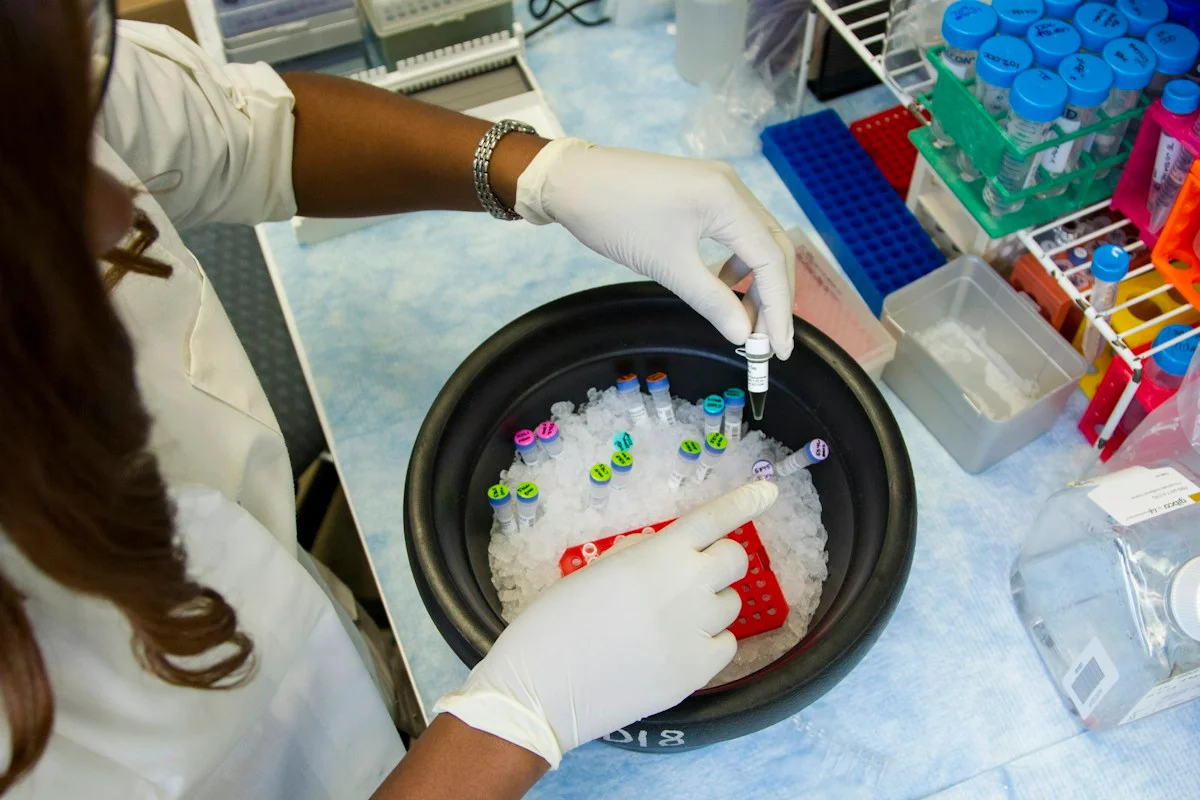
Illustrative photo · not a video frame
The Royal Society · 44 min 28 sec · Background explainer
Is this the AI future we want? | The Royal Society
YouTube loads only when you choose; playback starts when you press play.
A Royal Society discussion with Madhumita Murgia and biomedical engineer Alison Noble on AI’s potential in healthcare, science and culture, recorded at the 30 June 2026 event.
Evidence check: A discussion of opportunities and risks, including future possibilities. It is not evidence that every application described is available or clinically proven.
Published 2026-07-01. Source checked 14 October 2026. Check captions on the publisher’s video page.
Check the healthcare evidencePhoto: Daniel Sone / National Cancer Institute / Unsplash · Licence
Continue the story
Read next
Continue exploring clinical ai: compare the finding and its evidence limits.
Can chatbots match urologists on cancer decisions?
In 100 synthetic cancer cases, three leading chatbots were less often fully successful than two early-career urologists and made safety-critical errors far more often. Repeated answers also changed substantially.
Read the next reportExplore the full source and evidence record
What this means for people
- Clinicians and patients could benefit if decision-support systems preserve more useful options while respecting richer safety rules, but this experiment should not be used to recommend, add or remove any medication.
Global context
Medication vocabularies, prescribing practices and electronic records differ across countries and care settings. Exact constrained decoding may be technically portable, but its rules and validation must be local, clinical and patient-specific.
What the evidence does not yet show
- This is an unreviewed retrospective benchmark on one dataset, one frozen scorer and one binary interaction graph.
- The fixed list length averages nearly 27 medicines and does not model whether a smaller or larger regimen is appropriate.
- The study measures agreement with recorded medication sets, not prescribing quality, adverse events or patient benefit.
- The corresponding author is affiliated with Optum; no separate funding or competing-interest statement is reported.
What to watch next
- External validation on newer and non-US records
- Constraints incorporating dose, timing, severity and patient context
- Runtime tests with larger formularies
- Prospective clinician and patient-outcome evaluation
Living evidence record
Impact record IAI-0B6K3X5
Evidence stage
Studied
Confidence
Supported
Reporting basis
Source analysis
Independent or research support
Not yet
Record status
Monitoring
Last checked
22 October 2026
Source trail
1 direct source across 1 source type.
People impact
Documented in this record.
Uncertainty
Limits and next checks are explicit.
Stages describe the evidence available—not whether a technology is good or bad. See the public method.
Single-source reporting disclosure
This record analyses one direct source. It can establish what arXiv published or reported, but it is not independent corroboration of every performance claim or predicted outcome. The confidence label will change only when broader evidence is added.
Evidence trail
Sources used for this report
Links checked 22 October 2026
Research question, topics and regions
Whether exact global decoding improves a frozen medication recommender over local drug-interaction repair at matched constraints
Topics: Medication recommendation · Clinical AI · Drug interactions · Constrained optimisation · Patient safety
Regions: United States · North America
This report is labelled source analysis. We summarise and analyse source material in our own words; company statements remain attributed claims until independently supported. Translated summaries preserve the meaning of the original source and link back to it. Read our editorial standards.
Reader commentary
What does this mean where you are?
Tell us what you have seen at work, in your community or in everyday life. A question is welcome too. No account is needed; we review notes before publishing them.
Explore commentary across the portal →Published reader notes
0No published reader notes yet. You can start the evidence-led discussion above.
Prefer a private correction or response? Contact the newsroom.