OpenAI says its models solved three major theory problems. What is actually verified?
Lean formalizations and two AI-generated manuscripts are public, while external experts are only beginning to assess the claims. OpenAI itself calls the work raw research data; the physics materials are still withheld.
The short version
- What happened
- OpenAI announced AI-generated results on local smoothing and Kakeya, the Exponential Time Hypothesis, and four-dimensional quantum field theory; these are extraordinary company claims, not peer-reviewed conclusions.
- Who it affects
- Scientists may gain a new way to generate and check arguments, but premature acceptance could redirect research, credit or funding before the claims are understood.
- What remains unproven
- Company announcement rather than peer-reviewed publication
Keep in mind
Company announcement rather than peer-reviewed publication
OpenAI generated and released the materials
No settled independent verdict
Physics artifacts are not public
Formal correctness does not by itself establish novelty, interpretation or practical scientific impact
Source analysis · 3 linked sources. Primary analysed source date: 26 October 2026. Earliest linked supporting source: 25 October 2026.
Keep following the evidence
Join The Impact Brief founding list for selected AI reports, their effect on people and the evidence limits. Read a sample first.
Read the full report · 4 min The evidence, methods, implications and limitations

Three claims arrived with three different release states
OpenAI announced on 26 October that internal models had produced a proof of the local smoothing conjecture in every dimension, a disproof of the Exponential Time Hypothesis, and existence proofs for certain four-dimensional quantum field theories including QCD. If accepted, each would matter deeply in its field. But the company explicitly describes the manuscripts as raw research data and says it does not yet know which community-verification process will work best.
The local-smoothing manuscript and Lean development are public. The ETH natural-language proof and formalization are also public, with a group led by Russell Impagliazzo, Ramamohan Paturi and Ryan Williams organizing examination. For the physics claim, a group led by David Gross is reviewing the work and has not released the AI-produced artifacts. Readers can therefore inspect two claims in detail; the third cannot yet be independently checked from the supplied materials.[1][2][3]
Lean verification is important, but it is not the whole verdict
A proof assistant checks whether a formal statement follows from definitions, axioms and earlier lemmas without an invalid logical step. That is stronger evidence than an unchecked generated argument. OpenAI's local-smoothing scope document says the development includes estimates connected to Kakeya sets in all dimensions; the company also says the ETH result was formalized the day after its natural-language disproof.
Formalization still leaves scientific questions. Experts must confirm that the encoded theorem is exactly the theorem people think was solved, that assumptions do not smuggle in the conclusion, and that imported libraries and definitions are appropriate. They must compare the argument with prior literature and explain its conceptual contribution. A machine-checked file can be correct yet narrower, differently framed or less novel than a launch headline suggests.[1][2][3]
The distinction that matters
Three results, three verification stages
The public evidence is uneven, so the claims should not share one confidence label.
Local smoothing
Manuscript and Lean scope public
Open for independent checking
ETH
Proof, formalization and expert group public
Organized verification beginning
Quantum field theory
Expert group formed; artifacts withheld
Independent inspection not yet possible
The verification process is now the story
OpenAI says external working-group participation is voluntary and unpaid, participants may discuss the work freely, and the groups' conclusions will be independent. The company does not seek academic credit for the model outputs and has agreed to release raw ETH materials and fund a conference about the claim. Those commitments improve inspectability, while the initial choice of shepherds still shapes access and attention.
For researchers, the immediate task is reproduction and interpretation—not rewriting textbooks. No journal acceptance, independent proof audit or settled community verdict accompanied the announcement. The assessment would change if experts publish transparent checks that connect every formal statement to the claimed result and establish novelty; it would weaken if gaps, mismatches or prior results emerge. Until then, these are unusually well-artifacted claims under active examination, not confirmed scientific breakthroughs.[1]
Watch the background, then check the evidence
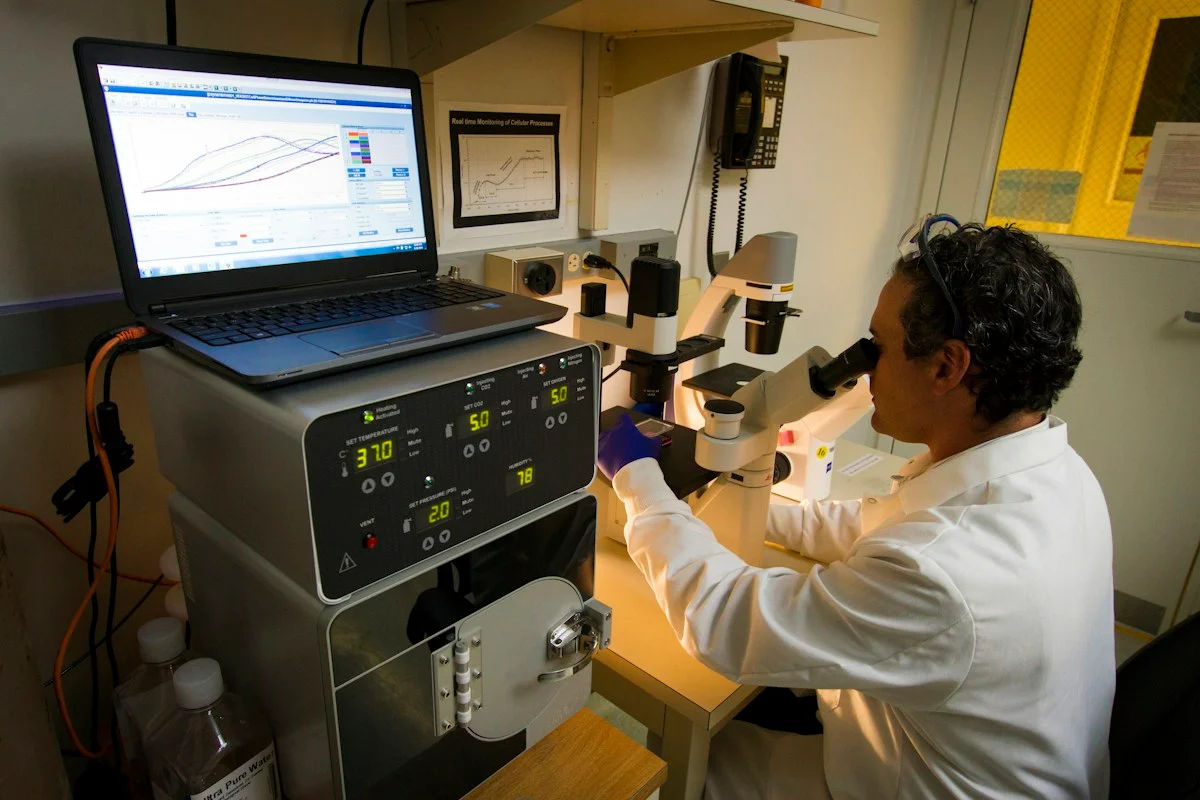
Illustrative photo · not a video frame
Google DeepMind · 1 min 52 sec · Background explainer
Protein folding explained
YouTube loads only when you choose; playback starts when you press play.
A short introduction to why a protein’s shape matters. It provides background for understanding what AI structure prediction contributes to biological research.
Evidence check: This is the developer’s explanation. Predicting a structure does not by itself establish a treatment’s safety or benefit for patients.
Published 2020-11-30. Source checked 14 October 2026. Check captions on the publisher’s video page.
Explore current researchContinue the story
Read next
Continue exploring mathematics: compare the finding and its evidence limits.
What did first-day verification find in OpenAI’s mass maths release?
OpenAI’s repository now lists 719 AI-produced manuscripts, down from 722 after a sign error invalidated three linked papers. Fourteen more received proof repairs, and 300 of 719 top-line results have formalizations—evidence that publication volume and verified mathematical knowledge are not the same thing.
Read the next reportExplore the full source and evidence record
What this means for people
- Scientists may gain a new way to generate and check arguments, but premature acceptance could redirect research, credit or funding before the claims are understood.
Global context
The proposed verification groups involve prominent US-based institutions, while the results concern international research communities. Broader participation and public artifacts matter for equitable scrutiny and credit.
What the evidence does not yet show
- Company announcement rather than peer-reviewed publication
- OpenAI generated and released the materials
- No settled independent verdict
- Physics artifacts are not public
- Formal correctness does not by itself establish novelty, interpretation or practical scientific impact
What to watch next
- Independent Lean builds and theorem-scope audits
- Public expert reports on the ETH and local-smoothing arguments
- Release of the physics artifacts
- Peer-reviewed explanations and prior-art analysis
Living evidence record
Impact record IAI-0SVS6HA
Evidence stage
Announced
Confidence
Supported
Reporting basis
Source analysis
Independent or research support
Not yet
Record status
Monitoring
Last checked
27 October 2026
Source trail
3 direct sources across 2 source types.
People impact
Documented in this record.
Uncertainty
Limits and next checks are explicit.
Stages describe the evidence available—not whether a technology is good or bad. See the public method.
Related-source reporting disclosure
This record analyses 3 linked source records around the same underlying development. The extra records add method, date or context, but they do not by themselves constitute independent replication of every performance claim or predicted outcome.
Evidence trail
Sources used for this report
Links checked 27 October 2026
Research question, topics and regions
How much confidence is warranted in OpenAI's AI-generated theoretical results before independent mathematical and scientific verification
Topics: Mathematics · Formal proof · Scientific verification · Complexity theory · Physics
Regions: United States · Global
This report is labelled source analysis. We summarise and analyse source material in our own words; company statements remain attributed claims until independently supported. Translated summaries preserve the meaning of the original source and link back to it. Read our editorial standards.
Reader commentary
What does this mean where you are?
Tell us what you have seen at work, in your community or in everyday life. A question is welcome too. No account is needed; we review notes before publishing them.
Explore commentary across the portal →Published reader notes
0No published reader notes yet. You can start the evidence-led discussion above.
Prefer a private correction or response? Contact the newsroom.