AI reconstructed heart-flow patterns from sparse particles—how close is that to clinical imaging?
A peer-reviewed Chinese study recovered trajectories and velocity fields in two simulations and two cardiovascular laboratory rigs. The tests are technically promising, but they did not involve living patients or clinical decisions.
The short version
- What happened
- TrajectoryFlowNet combined sparse particle observations with Navier–Stokes constraints and was tested in two simulations plus laboratory aortic and left-ventricular flow rigs.
- Who it affects
- Patients do not receive a new test or treatment from this study. The near-term beneficiary is a researcher trying to recover more information from incomplete flow measurements.
- What remains unproven
- Two cardiovascular laboratory rigs cannot represent patient variation; the work was two-dimensional, required case-by-case retraining, lacked experimental pressure ground truth and did not test diagnosis, treatment choice or patient outcomes.
One model connected moving particles to the surrounding flow
Researchers from four Chinese institutions built TrajectoryFlowNet to learn both the paths of particles and the velocity and pressure fields around them. Instead of relying only on labelled examples, the model is constrained by the Navier–Stokes equations that govern fluid motion. That matters because real experiments often capture incomplete particle tracks, while standard reconstruction methods can require boundary conditions that are difficult to measure.[1][2]
Who it affects
Patients do not receive a new test or treatment from this study. The near-term beneficiary is a researcher trying to recover more information from incomplete flow measurements.[1][2]
Keep in mind
Two cardiovascular laboratory rigs cannot represent patient variation; the work was two-dimensional, required case-by-case retraining, lacked experimental pressure ground truth and did not test diagnosis, treatment choice or patient outcomes.
Source analysis · 2 linked sources. Original source date: 20 October 2026.
Keep following the evidence
Join The Impact Brief founding list for selected AI reports, their effect on people and the evidence limits. Read a sample first.
Read the full report · 3 min The evidence, methods, implications and limitations

One model connected moving particles to the surrounding flow
Researchers from four Chinese institutions built TrajectoryFlowNet to learn both the paths of particles and the velocity and pressure fields around them. Instead of relying only on labelled examples, the model is constrained by the Navier–Stokes equations that govern fluid motion. That matters because real experiments often capture incomplete particle tracks, while standard reconstruction methods can require boundary conditions that are difficult to measure.
The team first tested two simulations. In a lid-driven cavity, 200 particle tracks containing 80,200 points trained the model and 100 tracks containing 40,100 points tested it. Relative trajectory errors stayed below 5% and correlations exceeded 0.997. Around a more complex cylinder, 2,000 tracks trained the system and 200 tested it; errors stayed below 6% and correlations exceeded 0.98. These are held-out particles from the same simulated settings, not proof of transfer to a new patient or device.[1][2]
The heart-flow experiments were controlled laboratory models
For an aortic test, the researchers used a silicone model derived from one healthy person's CT scan and a 23-millimetre replacement valve. Training drew on 5,489 observed particles, expanded into 47,590 spatiotemporal points; testing used 69 trajectories with 582 points and 50 particle-image-velocimetry snapshots. Trajectory error remained below 6%, while correlations for the two measured velocity components were 0.8703 and 0.7355.
A left-ventricle rig combined dissected valves with an adult-CT-derived silicone chamber running at 60 beats per minute and 3.6 litres per minute. The model trained on 18,000 points and was tested on 96 trajectories with 646 points plus 200 flow snapshots. Trajectory correlations were around or above 0.98; velocity-component correlations were 0.7316 and 0.9201. The uneven velocity results show why a good-looking reconstruction should not be treated as ground truth.
The work could eventually help researchers estimate flow where measurements are sparse, including around valves. It is not a clinical imaging trial. Each case required retraining, the experiments were two-dimensional and fixed to particular flow conditions, and there was no experimental pressure ground truth. The authors also identify scaling and uncertainty problems for large three-dimensional turbulent flows. Confidence would rise with external laboratories, prospective 3D patient data, uncertainty calibration and tests showing that clinicians make better decisions because of the reconstruction.[1][2]
The distinction that matters
What was measured at each stage
The evidence narrows from precise simulations to noisier benchtop cardiovascular experiments.
Simulations
Known flow and held-out particles
Trajectory errors below 5–6%
Aortic rig
69 tracks and 50 flow snapshots tested
Velocity correlations 0.8703 and 0.7355
Ventricular rig
96 tracks and 200 snapshots tested
Velocity correlations 0.7316 and 0.9201
Watch the background, then check the evidence
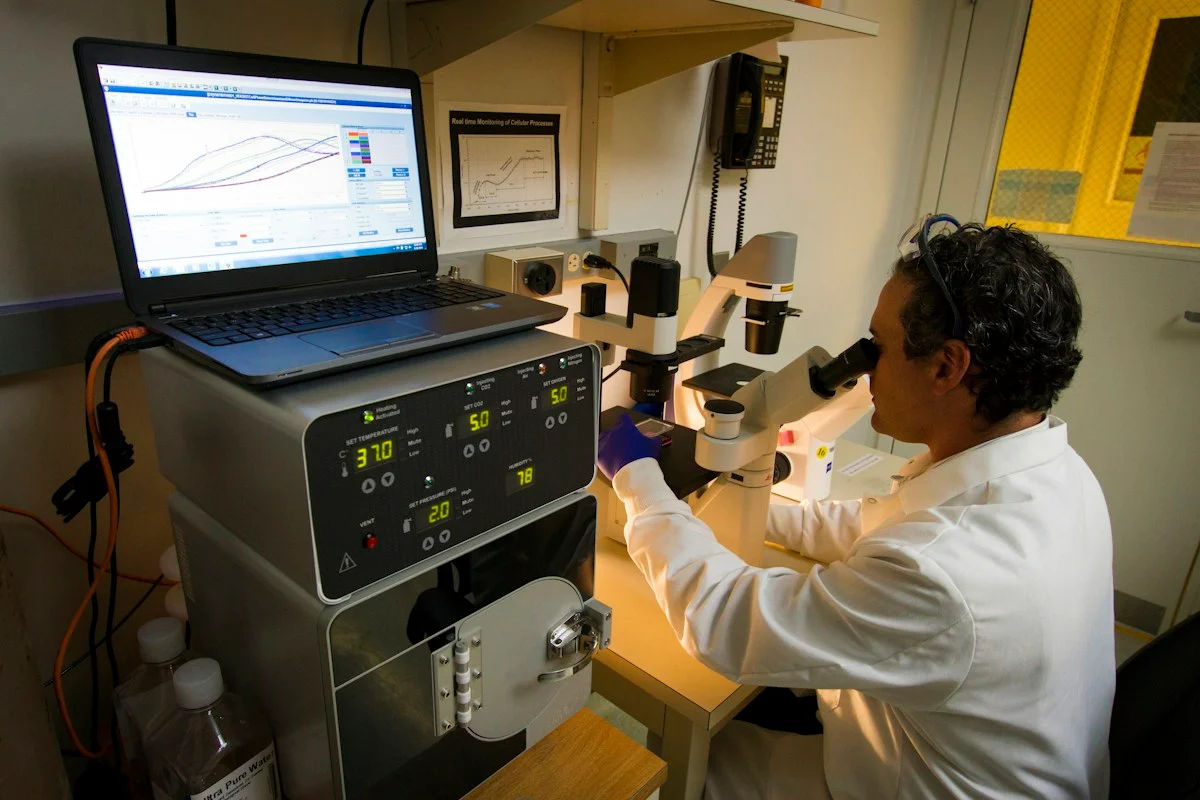
Illustrative photo · not a video frame
Google DeepMind · 1 min 52 sec · Background explainer
Protein folding explained
YouTube loads only when you choose; playback starts when you press play.
A short introduction to why a protein’s shape matters. It provides background for understanding what AI structure prediction contributes to biological research.
Evidence check: This is the developer’s explanation. Predicting a structure does not by itself establish a treatment’s safety or benefit for patients.
Published 2020-11-30. Source checked 14 October 2026. Check captions on the publisher’s video page.
Explore current researchEvidence check
Two cardiovascular laboratory rigs cannot represent patient variation; the work was two-dimensional, required case-by-case retraining, lacked experimental pressure ground truth and did not test diagnosis, treatment choice or patient outcomes.
Reporting basis: Source analysis. Original source date: 20 October 2026.
Continue the story
Read next
Continue exploring medical imaging: compare the finding and its evidence limits.
Does 93.5% Dice make this ovarian-cancer CT AI clinically ready?
No. A two-stage ensemble improved segmentation on a patient-separated TCGA-OV test set, but the study involved only 143 patients, inherited molecular labels at patient level and had no external or prospective clinical validation.
Read the next reportExplore the full source and evidence record
What this means for people
- Patients do not receive a new test or treatment from this study. The near-term beneficiary is a researcher trying to recover more information from incomplete flow measurements.
Global context
The study came from Chinese universities and institutes but addresses a general measurement problem in fluid mechanics. Clinical usefulness would depend on independent validation across scanners, hospitals, anatomies and disease states.
What the evidence does not yet show
- Two cardiovascular laboratory rigs cannot represent patient variation; the work was two-dimensional, required case-by-case retraining, lacked experimental pressure ground truth and did not test diagnosis, treatment choice or patient outcomes.
What to watch next
- External replication, three-dimensional and changing-flow tests, calibrated uncertainty, prospective patient imaging and evidence that the reconstruction improves a real clinical decision would change the assessment.
Living evidence record
Impact record IAI-143XXBH
Evidence stage
Studied
Confidence
Supported
Reporting basis
Source analysis
Independent or research support
Present
Record status
Monitoring
Last checked
21 October 2026
Source trail
2 direct sources across 1 source type.
People impact
Documented in this record.
Uncertainty
Limits and next checks are explicit.
Stages describe the evidence available—not whether a technology is good or bad. See the public method.
Related-source reporting disclosure
This record analyses 2 linked source records around the same underlying development. The extra records add method, date or context, but they do not by themselves constitute independent replication of every performance claim or predicted outcome.
Evidence trail
Sources used for this report
Links checked 21 October 2026
Research question, topics and regions
Whether a physics-informed neural network can infer particle trajectories and velocity and pressure fields from sparse flow observations without being given explicit boundary conditions
Topics: Physics-informed AI · Fluid dynamics · Cardiovascular research · Particle tracking · Medical imaging
Regions: China · East Asia · Global
This report is labelled source analysis. We summarise and analyse source material in our own words; company statements remain attributed claims until independently supported. Translated summaries preserve the meaning of the original source and link back to it. Read our editorial standards.
Reader commentary
What does this mean where you are?
Tell us what you have seen at work, in your community or in everyday life. A question is welcome too. No account is needed; we review notes before publishing them.
Explore commentary across the portal →Published reader notes
0No published reader notes yet. You can start the evidence-led discussion above.
Prefer a private correction or response? Contact the newsroom.