AI found 12 human proteins that carried mRNA in cells—animals remain untested
DeepDelivery screened the human proteome, nominated 512 candidates and tested 15 new proteins in a modular particle system. Twelve showed detectable delivery in cultured cells; the peer-reviewed work is an early platform result, not evidence of a therapy.
The short version
- What happened
- Two sequence models nominated 512 human proteins; researchers selected 15 new candidates from enriched families and included three known delivery proteins as positive controls.
- Who it affects
- Safer repeatable mRNA delivery could matter for vaccines and therapies, but this study does not show that any candidate is safe or effective in a person. Its immediate impact is a shortlist and engineering method for laboratory researchers.
- What remains unproven
- No animal, human, therapeutic efficacy, biodistribution or long-term safety experiment.
Keep in mind
No animal, human, therapeutic efficacy, biodistribution or long-term safety experiment.
Only 15 of 512 new candidates were selected for validation, and most functional assays used three independent biological replicates.
The modular particle and reporter-cell system may not predict performance with therapeutic cargo or in living tissue.
Government and institutional grants supported the work; patent applications cover reported scaffolds and the senior author holds equity in a related biotechnology company.
Source analysis · 1 linked source. Primary analysed source date: 31 October 2026.
Keep following the evidence
Join The Impact Brief founding list for selected AI reports, their effect on people and the evidence limits. Read a sample first.
Read the full report · 3 min The evidence, methods, implications and limitations

A proteome-scale search produced testable carriers
An AI-guided screen found human proteins that can help engineered particles carry mRNA into cultured cells. DeepDelivery learned sequence patterns associated with viral capsid proteins, then applied two models across the human proteome. Their overlap produced 512 candidates. Researchers selected 15 new proteins representing enriched families, added three previously reported positive controls and tested all 18 in a modular particle design.
Twelve of the 15 new candidates produced detectable functional delivery, so 15 of 18 proteins worked when the known controls were included. Several came from the TRIM family, better known for antiviral roles. Experiments in HEK293T and liver-derived HepG2 cells measured reporter activation, usually across three independent biological replicates; deletion and perturbation tests linked assembly domains to model predictions.[1]
Human-derived does not yet mean safe or therapeutic
The platform addresses a real design question: carriers made from human proteins might eventually reduce some immune problems associated with repeated delivery. The study also compared inflammatory markers in cell models and human-derived immature dendritic cells. But three replicates, reporter systems and cultured cells cannot establish biodistribution, dose, cargo capacity, durability, toxicity or immune safety in a living organism.
The article is peer reviewed and exposes source data, supplementary files and review history. Its conflicts matter: two authors are named on patent applications covering the reported delivery proteins, and senior author Chao Zhong co-founded and owns equity in Shenzhen PAM2L Biotechnologies. Animal studies with independent replication and direct comparisons against established delivery systems would change the assessment.[1]
The distinction that matters
From sequence screen to cell experiment
The model narrowed a large search; laboratory work determined which candidates actually delivered a reporter cargo.
AI screen
Two models scan human proteins
512 shared candidates
Laboratory test
15 new proteins plus 3 controls
12 new candidates showed detectable delivery
Evidence boundary
Cultured-cell assays, mostly n=3
No animal, patient or treatment result
Watch the background, then check the evidence
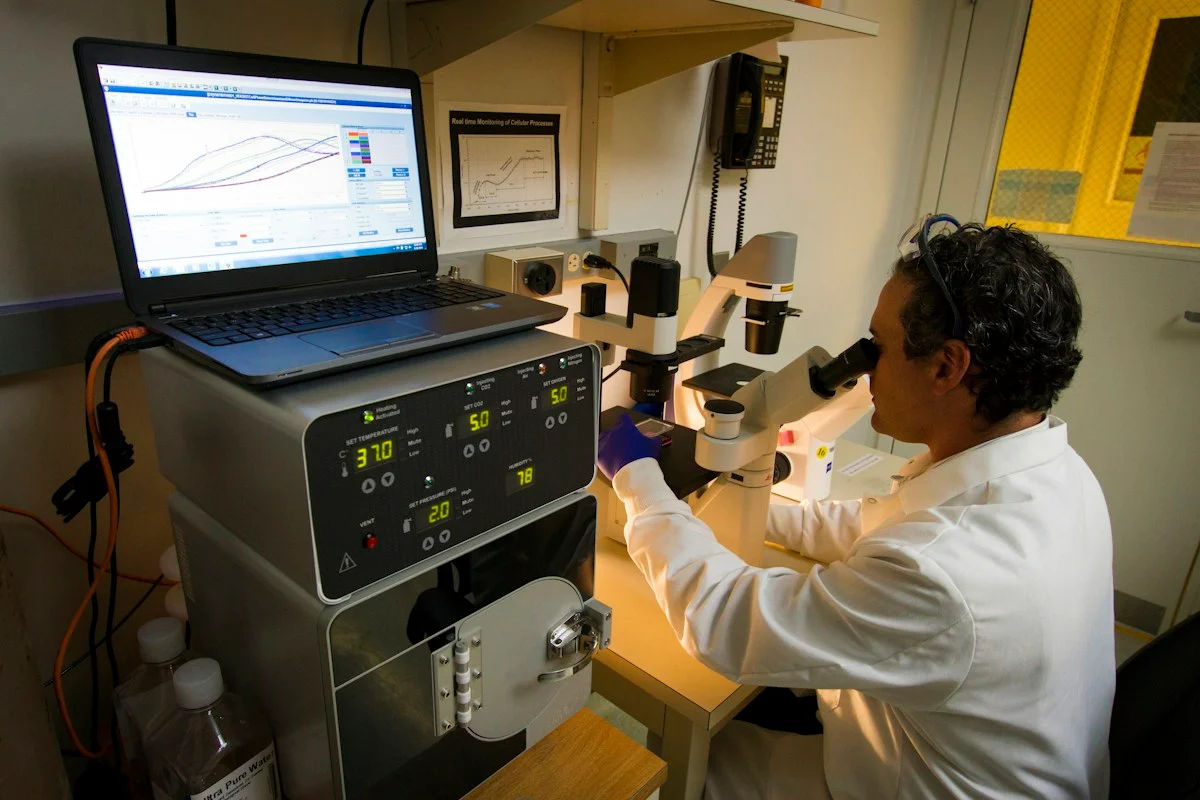
Illustrative photo · not a video frame
Google DeepMind · 1 min 52 sec · Background explainer
Protein folding explained
YouTube loads only when you choose; playback starts when you press play.
A short introduction to why a protein’s shape matters. It provides background for understanding what AI structure prediction contributes to biological research.
Evidence check: This is the developer’s explanation. Predicting a structure does not by itself establish a treatment’s safety or benefit for patients.
Published 2020-11-30. Source checked 14 October 2026. Check captions on the publisher’s video page.
Explore current researchContinue the story
Read next
Continue exploring synthetic biology: compare the finding and its evidence limits.
Can a written instruction become a working protein?
A peer-reviewed Nature paper reports that Pinal turned plain-language descriptions into active proteins across four laboratory tasks. The strongest result was a designed H-protein that raised product titre 1.7-fold in one carbon-fixation pathway—but the study is still a small, task-specific proof of concept.
Read the next reportExplore the full source and evidence record
What this means for people
- Safer repeatable mRNA delivery could matter for vaccines and therapies, but this study does not show that any candidate is safe or effective in a person. Its immediate impact is a shortlist and engineering method for laboratory researchers.
Global context
Most mRNA delivery research still relies on lipid nanoparticles or viral components. Human-derived protein carriers are one alternative, but manufacturability, targeting, repeat dosing and regulation will determine whether a cell-level platform becomes clinically useful.
What the evidence does not yet show
- No animal, human, therapeutic efficacy, biodistribution or long-term safety experiment.
- Only 15 of 512 new candidates were selected for validation, and most functional assays used three independent biological replicates.
- The modular particle and reporter-cell system may not predict performance with therapeutic cargo or in living tissue.
- Government and institutional grants supported the work; patent applications cover reported scaffolds and the senior author holds equity in a related biotechnology company.
What to watch next
- Independent replication
- Animal biodistribution and toxicity
- Therapeutic-cargo delivery
- Repeat-dose immune responses
- Benchmarking against lipid nanoparticles
- Patent and company development disclosures
Living evidence record
Impact record IAI-0P4T0H5
Evidence stage
Studied
Confidence
Supported
Reporting basis
Source analysis
Independent or research support
Present
Record status
Monitoring
Last checked
31 October 2026
Source trail
1 direct source across 1 source type.
People impact
Documented in this record.
Uncertainty
Limits and next checks are explicit.
Stages describe the evidence available—not whether a technology is good or bad. See the public method.
Single-source reporting disclosure
This record analyses one direct source. It can establish what Nature Communications published or reported, but it is not independent corroboration of every performance claim or predicted outcome. The confidence label will change only when broader evidence is added.
Evidence trail
Sources used for this report
Links checked 31 October 2026
Research question, topics and regions
Whether AI can identify human proteins that assemble into scaffolds for mRNA delivery
Topics: AI for science · mRNA delivery · Protein engineering · Synthetic biology · Laboratory research
Regions: Asia · China · Hong Kong · Global
This report is labelled source analysis. We summarise and analyse source material in our own words; company statements remain attributed claims until independently supported. Translated summaries preserve the meaning of the original source and link back to it. Read our editorial standards.
Reader commentary
What does this mean where you are?
Tell us what you have seen at work, in your community or in everyday life. A question is welcome too. No account is needed; we review notes before publishing them.
Explore commentary across the portal →Published reader notes
0No published reader notes yet. You can start the evidence-led discussion above.
Prefer a private correction or response? Contact the newsroom.